

Your training plan needs an air-quality check.
You might check the temperature, wind, and rain before heading out. But when wildfire smoke or other pollution reaches your route, clear skies and comfortable temperatures can give you false reassurance. Your next decision should depend on local air-quality information, your planned effort, and your health, not just what you can see or smell.
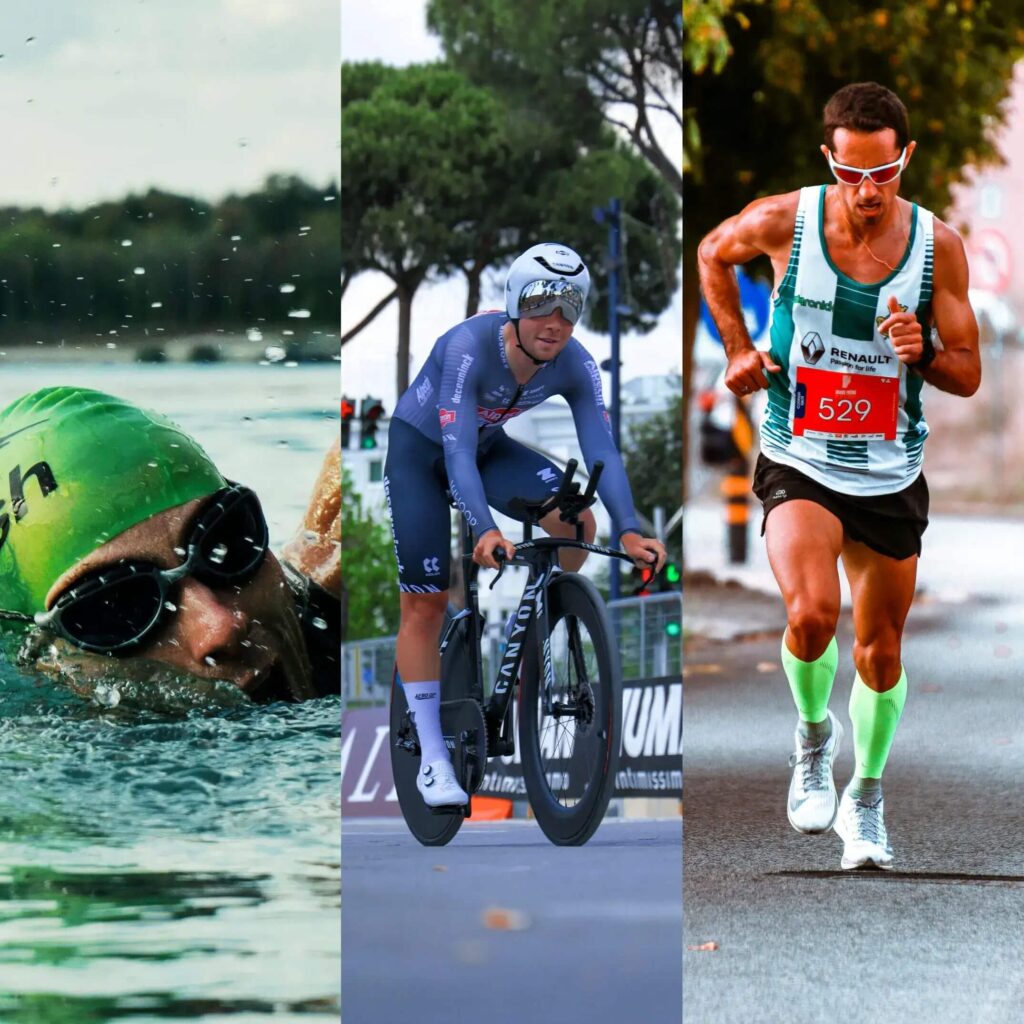
For your next run, ride, or outdoor swim, use this approach: check the pollutant, check the trend, and adjust before you start.
Why your workout changes your exposure
When you exercise harder, you breathe more air each minute. When you stay out longer, you extend your exposure. That means a short walk and a three-hour ride through the same conditions create different exposure patterns.
During wildfire smoke events, pay particular attention to fine particulate matter, or PM2.5. These particles measure generally 2.5 micrometers or smaller in diameter. As the U.S. Environmental Protection Agency explains, fine particles can travel deep into your lungs, and some can enter your bloodstream.
You do not need to feel breathless for exposure to matter. You also cannot judge particle concentrations reliably by checking whether the horizon looks hazy.
Read the AQI, not just the weather icon
In the United States, use the Air Quality Index, or AQI, as your starting point. The AirNow AQI guide separates conditions into six categories, from “Good” to “Hazardous.” Outside the United States, check your local health authority’s index: you cannot assume that identical numbers mean identical conditions across different national systems.
Before leaving, look beyond the headline number. Check which pollutant drives the reading, how recently the monitor reported, and whether the forecast suggests improvement or deterioration. For a long ride, check conditions along your route rather than relying only on your starting location.
- AQI 0–50, Good: You can generally follow your normal outdoor plan, while considering any personal medical advice.
- AQI 51–100, Moderate: You can usually continue outdoor activity, but consider reducing prolonged or heavy exertion if you have unusual sensitivity to air pollution or develop symptoms.
- AQI 101–150, Unhealthy for Sensitive Groups: Check the pollutant-specific advice and your own risk factors. If you have heart or lung disease, including asthma, take particular care. For a long or demanding endurance session, choosing cleaner indoor air offers a conservative training option.
- AQI 151–200, Unhealthy: Move your hard or prolonged session indoors to cleaner air. You can experience health effects even without a known medical condition.
- AQI 201 or higher, Very Unhealthy or Hazardous: Skip outdoor training and follow local public-health instructions.
Treat these workout choices as a conservative planning framework, not a guarantee of safety. Your symptoms, medical history, and local alerts can justify changing plans at a lower AQI.
Match your decision to the pollutant
You cannot solve every air-quality problem by starting earlier.
For ozone, you may find better conditions in the morning because ozone often rises during sunny afternoons. Wildfire smoke follows a different pattern: changing winds, terrain, and overnight conditions can shift concentrations substantially. Check the hourly forecast rather than applying an “early always wins” rule.
Your route choice matters, too. You can reduce direct exposure to traffic emissions by avoiding busy roads and intersections, but a quiet trail cannot reliably protect you from a regional smoke plume. A cleaner-looking route does not necessarily offer cleaner air.
Make your indoor alternative genuinely cleaner
Moving indoors helps most when you also reduce indoor pollution. During smoke events, close windows and doors when conditions allow, use an appropriately sized portable air cleaner, and follow guidance for your ventilation system. Avoid adding particles through candles, smoking, or cooking methods that generate substantial smoke.
You can find practical filtration advice in AirNow’s wildfire smoke resources. Do not assume every gym offers clean air simply because you train inside; open doors, ventilation settings, and filtration all affect your exposure.
Keep your replacement session straightforward:
- For your interval run: Use a treadmill in a cleaner-air space, or postpone the quality session.
- For your long ride: Choose a manageable indoor ride rather than forcing yourself to reproduce every outdoor mile.
- For your outdoor swim: Choose a suitable indoor pool if you can confirm acceptable conditions, or change the day’s activity.
- For an easy day: Consider rest, mobility, or your familiar strength routine. You can use the strength training update to plan that work without turning a schedule change into an unfamiliar challenge.
Do not use a mask as permission to push harder
A well-fitting particulate respirator, such as an N95, can reduce how much smoke particulate you inhale. It does not filter gases such as ozone, and you need a good fit to gain protection. You may also find it uncomfortable during exercise.
Use cleaner air as your first training solution. Do not treat a respirator as a way to make a hard outdoor session safe during poor conditions.
Let symptoms override your schedule
Stop exercising if you develop coughing, wheezing, chest tightness, or unusual breathlessness. Move to cleaner air rather than finishing the interval or riding another loop. If you have asthma, follow your clinician’s action plan; do not improvise medication changes to rescue a workout.
Seek emergency help for chest pain, severe breathing difficulty, or other severe symptoms. Do not dismiss them as a normal response to smoke or hard training.
Build the backup before you need it
Before your next key session, identify your air-quality source and choose an indoor alternative. Check conditions again shortly before you leave, especially during an active smoke event.
You protect your training consistency by adapting to the air you actually have. Keep the goal of the session, but change the location, duration, or day when cleaner air offers the better choice.



Leave a Reply