

The hardest part of a triathlon taper is not doing less. It is doing less in the right places.
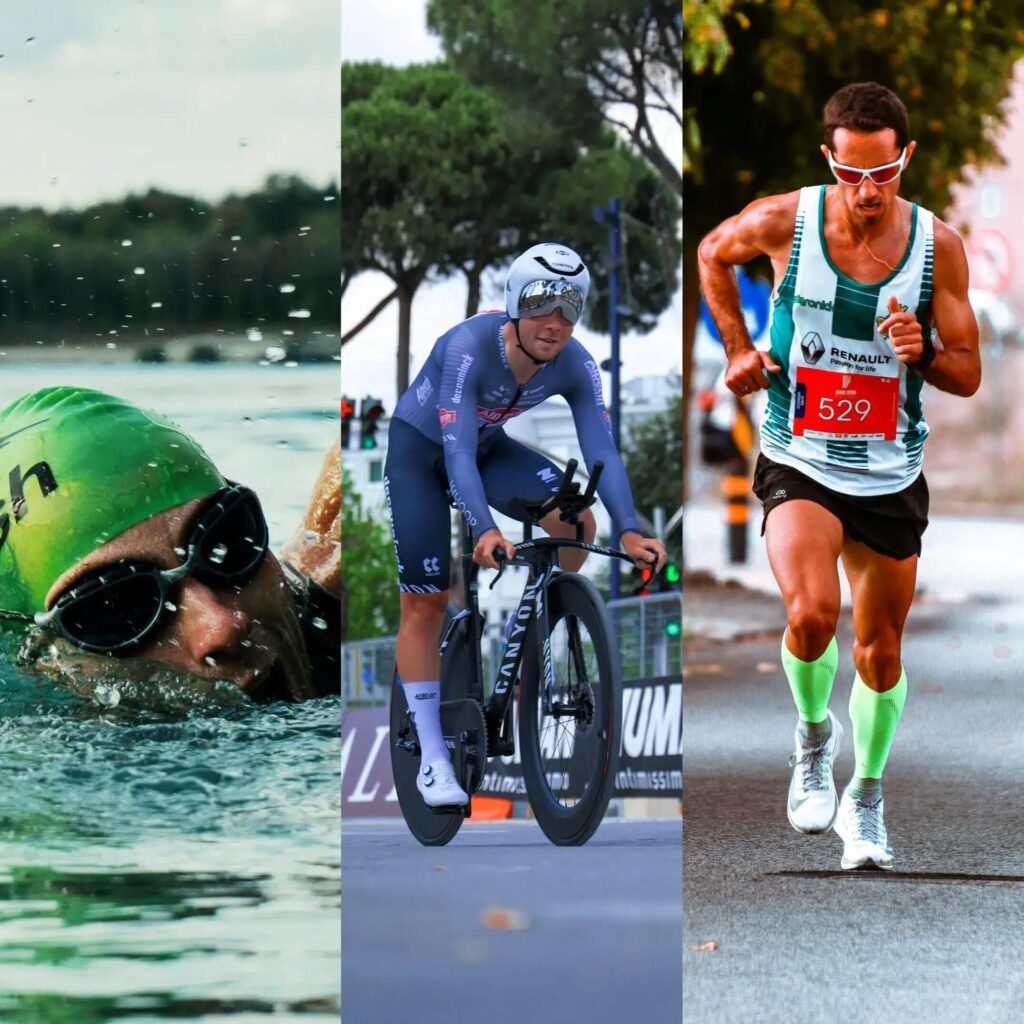
Most athletes understand the basic idea: reduce training so fatigue drops before race day. But triathlon makes that simple idea messy. You are not tapering one sport. You are trying to keep your swim feel, bike power, run rhythm, fueling routine, and transition habits sharp while the total workload comes down.
Cut too much and you arrive rested but stale. Hold too much and you arrive fit but dull. The goal is the middle: fresh legs, awake nervous system, calm mind, and no last-minute hero workouts.
What a Good Triathlon Taper Actually Does
A taper is not a fitness-building block. It is a fatigue-removal block.
Research on endurance tapering consistently points in the same direction: performance tends to improve when athletes reduce volume significantly while keeping some intensity and maintaining training frequency. Many successful tapers reduce total volume by roughly 40–60% over one to three weeks, depending on race distance, athlete history, and how deep the training block was.
For triathletes, that volume reduction should not come from deleting whole disciplines. If you stop swimming for a week, the water feels strange. If you stop running entirely, your first mile off the bike feels clunky. If you do not touch race power on the bike, your pacing can feel foreign on race day.
The better approach is to keep touching all three sports, but make each touch shorter and cleaner.
The Rule: Reduce Duration Before You Reduce Frequency
During a taper, many athletes make the mistake of cutting sessions completely. That creates big gaps. In a single-sport plan, that may be fine. In triathlon, long gaps can make one discipline feel rusty.
Instead, keep the weekly rhythm familiar and trim the length.
- Swim: keep frequency if possible, reduce total meters, include short race-effort repeats.
- Bike: reduce long ride duration, keep a few controlled efforts at race power.
- Run: reduce volume most carefully, keep short strides or race-pace touches, avoid hard eccentric load.
This matters because running creates more muscle damage than swimming or cycling. In the final 10–14 days, most triathletes benefit from cutting run volume more aggressively than bike or swim volume, especially before a half-distance or full-distance race.
Do Not Chase Freshness Too Early
A common taper trap is expecting to feel amazing right away.
You may feel flat, restless, heavy, or oddly unmotivated during the first few reduced-load days. That does not mean the taper is failing. It often means your body is shifting from absorbing training stress to restoring itself.
The danger is responding to that flat feeling with a test workout. A 20-minute “just to see where I am” run at threshold or a hard group ride can bring back fatigue without adding useful fitness.
If you planned your heavy training well, the work is already done. The taper is where you stop spending from the account. For a deeper look at how to manage that training load before taper even begins, see The Fatigue Budget: How to Place Key Triathlon Workouts Without Burning Matches.
The Final Two Weeks: What to Keep, What to Cut
The exact taper depends on the race, but the pattern is usually similar: reduce long endurance work, keep short intensity, maintain technical rhythm, and protect sleep.
14 to 8 Days Out: Absorb the Big Block
This is the first step-down week. You are still training, but the sessions should stop before they create deep fatigue.
- Swim: 2–4 sessions with short race-effort sets, such as 12 x 100 steady with plenty of rest.
- Bike: one moderate ride with race-power intervals, such as 3 x 8 minutes at goal effort.
- Run: one short race-pace touch, such as 3 x 5 minutes controlled, not forced.
- Long session: shorter than usual, often 50–70% of peak long-session duration.
This week should feel like training, not vacation. But you should finish most workouts feeling like you could have done more.
7 to 3 Days Out: Sharpen, Do Not Prove
This is where discipline matters. The sessions get shorter, but you still include a little pace and power so race effort feels familiar.
- Swim: include starts, sighting, and short race-pace repeats. Keep the water feel alive.
- Bike: ride 45–75 minutes with 3–5 short efforts at race power.
- Run: 20–40 minutes with a few strides or brief race-pace segments.
- Transition practice: rehearse the sequence, not the fitness.
Your body does not need one more hard brick. It needs reminders. Short, crisp, and calm is the theme.
Final 48 Hours: Remove Friction
The last two days are not about adding readiness. They are about removing avoidable stress.
- Check your bike early, not at 9 p.m. the night before.
- Pack transition bags slowly, using a written list.
- Keep movement light: an easy spin, short swim, or short jog with a few pickups.
- Eat familiar foods and avoid aggressive “carb panic.”
- Stay off your feet more than usual, especially at the race expo.
If you are racing long-course, this is also when pacing discipline becomes part of the taper. The calmer you are before the start, the less likely you are to overreact during the first hour of the race.
Keep Transitions in the Taper, But Make Them Low Cost
Transition practice belongs in the taper, but not as a workout that creates fatigue.
Do not turn race week into repeated mount-line sprints and hard runs off the bike. Instead, rehearse the order of operations: helmet, glasses, shoes, bike out; bike in, shoes, hat, race belt, run out.
A simple race-week transition rehearsal might take 10 minutes in your driveway or hotel room. Lay out your gear. Walk through the sequence. Say the steps out loud. Fix anything that feels awkward.
This is especially useful for T1, where cold hands, high heart rate, and swim disorientation can make simple tasks feel complicated. If T1 has been a weak point for you, the ideas in The First 10 Minutes After the Swim: How to Stop T1 From Ruining Your Bike Leg pair well with a taper-week rehearsal.
A Sample Olympic-Distance Taper Week
Here is a simple race-week structure for an athlete racing on Sunday. Adjust the volume based on your level, but keep the intent the same.
- Monday: easy swim, 30–45 minutes, relaxed technique focus.
- Tuesday: bike 60 minutes with 4 x 3 minutes at race effort; short easy run off the bike, 10–15 minutes.
- Wednesday: easy run 30 minutes with 4–6 short strides.
- Thursday: swim 25–40 minutes with a few 50s at race effort.
- Friday: rest or very easy spin 30 minutes; transition gear check.
- Saturday: short pre-race session: 10–15 minute swim or jog, a few light pickups, nothing hard.
- Sunday: race.
For a 70.3, the same pattern works, but the taper usually starts earlier and the final long ride/run reductions are more important. For a sprint, the taper may be shorter, especially for experienced athletes who recover quickly.
Signs Your Taper Is Working
A good taper does not always feel magical. Look for practical signs instead:
- Your easy pace or power feels smoother, not necessarily faster.
- Your mood becomes more stable after a few lighter days.
- You finish workouts wanting more.
- Your legs feel responsive during short pickups.
- You are sleeping well, or at least resting more.
If you feel too energetic, resist the urge to spend it. That energy is the point. Save it for the course.
Final Takeaway
The triathlon taper is not a shutdown. It is a sharpening phase.
Keep touching all three sports. Cut duration before frequency. Maintain small doses of race effort. Practice transitions without turning them into workouts. Most of all, trust the training block you have already completed.
Race day rewards the athlete who arrives fresh, familiar, and calm. The taper is how you get there.



Leave a Reply