
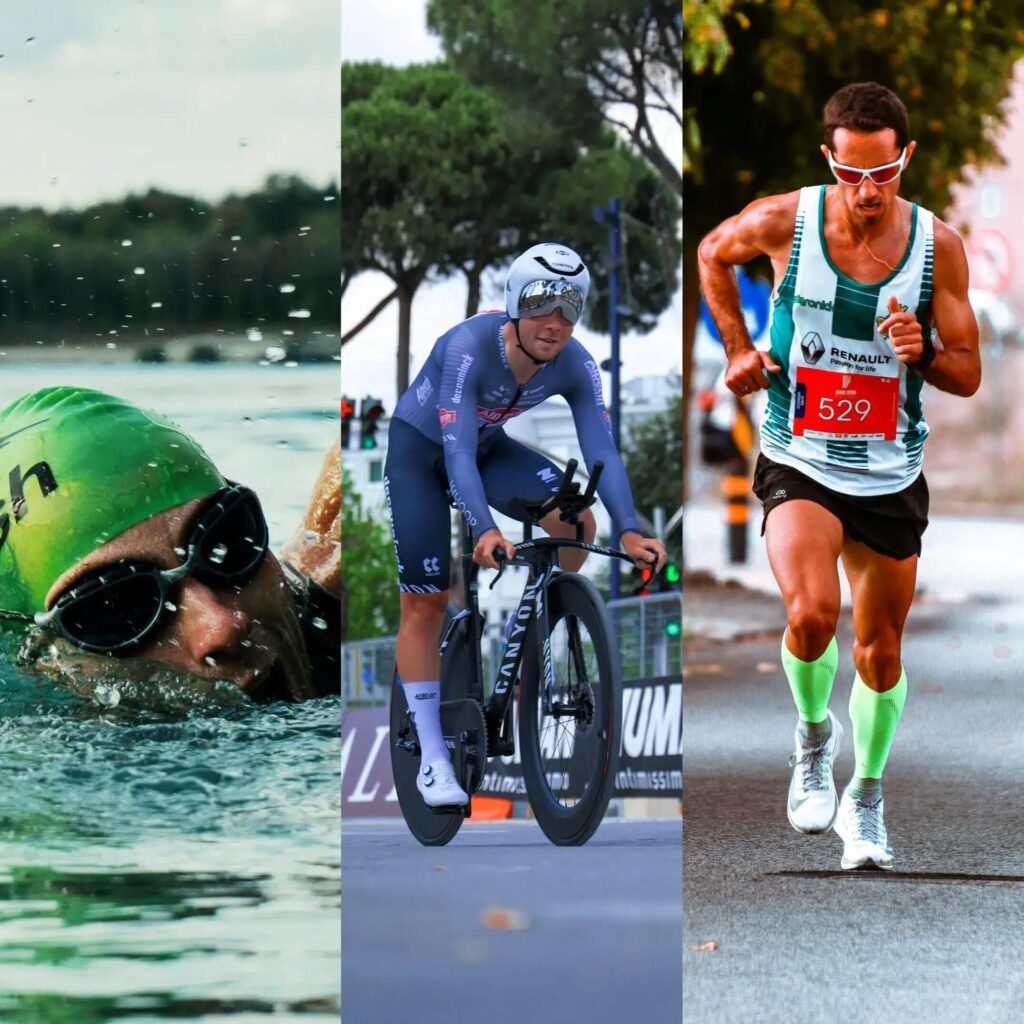
The swim does not end when your hand touches the ramp. For many triathletes, the most chaotic part of the race happens in the next 10 minutes: standing up too fast, fumbling with a wetsuit, sprinting through transition, jumping on the bike with a sky-high heart rate, then wondering why the first miles feel awful.
This is the swim-to-bike problem. It is not just a gear problem. It is a physiology problem, a pacing problem, and a decision-making problem happening all at once.
If you can make T1 and the opening bike segment calmer, you get more than a faster transition. You protect the entire ride.
Why T1 Feels So Messy
During the swim, your body is horizontal, supported by water, and often compressed by a wetsuit. Blood flow, breathing rhythm, and muscle use are all different from cycling. Then, within seconds, you stand up, run, strip gear, navigate a crowded transition area, and ask your legs to produce power.
That sudden change can create a few common issues:
- Dizziness or lightheadedness from moving quickly from horizontal to upright.
- A heart rate spike from running hard out of the water and rushing through T1.
- Cold or numb hands that make goggles, wetsuit sleeves, buckles, and nutrition hard to manage.
- Heavy legs because kicking, running barefoot, and mounting the bike all demand different coordination.
- Over-biking early because adrenaline makes race effort feel easier than it is.
None of these mean you are unfit. They mean the swim-to-bike handoff needs training.
Think of T1 as a Three-Part Sequence
Most athletes think of T1 as “get out of the water and get on the bike.” A better model is to break it into three parts: exit, rack, and settle.
1. Exit: Slow Is Smooth
The first 20 to 40 seconds after the swim should not be a panic sprint. If the water exit is shallow, use a few dolphin dives or strong steps only if you have practiced them. If it is steep, crowded, or slippery, prioritize balance.
As soon as you stand, take two full breaths before you start pushing the pace. This tiny reset can prevent the “redline shuffle” through transition, where your breathing gets ragged and your hands stop working.
For wetsuit races, unzip early if safe. Pull the suit down to your waist while jogging, but do not fight it at full speed. If your shoulders are tight or hands are cold, forcing it usually costs more time than it saves.
2. Rack: Remove Decisions
Your transition area should answer one question: what happens next?
Set it up in the order you will use it. Helmet first. Glasses inside helmet if you wear them. Bike shoes either clipped in if you are skilled and the race allows it, or placed open and ready. Nutrition visible. Nothing extra on the towel.
A simple T1 script might look like this:
- Goggles and cap off.
- Wetsuit down and off.
- Helmet on and clipped.
- Glasses on.
- Shoes on or run with bike if shoes are clipped in.
- Grab bike and go.
The key is that the helmet is clipped before the bike moves. Not only is this required in most races, it also gives you a firm checkpoint: once the helmet is secured, you are leaving.
If you want to sharpen this without turning every session into a hard workout, the micro-brick method is a useful way to practice small transition pieces with very little added fatigue.
3. Settle: The Bike Does Not Start at Race Power
The biggest mistake in T1 is not a slow wetsuit removal. It is riding the first few minutes too hard.
Coming out of the swim, your perceived effort is unreliable. Adrenaline is high. Everyone is moving. Your heart rate may already be elevated. If you surge to target power immediately, you may actually be riding above sustainable effort.
Use a “settle window” for the first 5 to 10 minutes of the bike.
- Sprint distance: 2 to 4 minutes controlled before building.
- Olympic distance: 5 to 8 minutes controlled.
- 70.3: 8 to 12 minutes controlled.
- Iron-distance: 10 to 15 minutes controlled.
Controlled does not mean easy. It means slightly under planned race effort while breathing, posture, and fueling come online.
The First 10 Minutes Bike Protocol
Here is a practical protocol you can test in training and use on race day.
Minute 0–2: Get Stable
Mount cleanly. Get your feet sorted. Avoid looking down for too long. If you use flying mounts or shoes clipped into the bike, only do this if it is already automatic in training.
Your first goal is safety and control, not speed.
Minute 2–5: Find Your Breathing
Keep cadence comfortable, usually around your normal race cadence or slightly higher. Let your breathing settle. Stay relaxed through your shoulders and hands.
If you train with power, cap this section below target race power. If you train by feel, ride at “I could hold a conversation in short phrases” effort, even if that feels too patient.
Minute 5–10: Build to Plan
Now begin moving toward your planned effort. Check posture. Check cadence. Take your first sip if the course and conditions allow it.
Do not use this section to “make up time.” If you lost 20 seconds in T1, chasing it with a three-minute surge can cost you much more later in the ride or on the run.
How to Train the Swim-to-Bike Handoff
You do not need a full race rehearsal every week. In fact, that can create unnecessary fatigue. Instead, use short, targeted practice sessions.
Pool-to-Bike Trainer Session
After an aerobic swim, change quickly and ride 15 to 25 minutes on the trainer. The ride should start very controlled, then build to race effort.
Example:
- Swim: 1,500–2,500 meters mostly aerobic, with 4 x 100 meters at race effort.
- Transition: steady but not frantic.
- Bike: 5 minutes easy, 10 minutes at planned race effort, 5 minutes easy.
This teaches your body what it feels like to ride after swimming without turning the day into a major brick.
Open-Water Exit Practice
If you have safe access to open water, practice exits. Swim 5 to 8 minutes, then stand, jog 20 to 30 seconds, and reset. Repeat a few times.
Focus on staying calm when your breathing changes. If you race in a wetsuit, rehearse unzipping and pulling it to your waist while moving.
Low-Stress T1 Rehearsal
At home, set up your transition area and run through the sequence three to five times. Time it if you want, but the goal is clean execution.
Practice with wet hands. Practice when slightly out of breath. Practice with the exact gear you will use on race day.
Common T1 Mistakes That Carry Into the Bike
- Leaving too much gear in transition. More items create more choices.
- Starting the bike under-fueled. If your race is long enough to require early nutrition, make it easy to access.
- Ignoring course layout. Know where the mount line is, whether the road rises immediately, and if there are early turns.
- Using race day to try a new mount style. A fast mount you cannot execute under stress is not fast.
- Riding by ego in the first mile. Let others surge. You are racing the full distance.
For longer events, this connects directly to how you manage your overall effort. A smart T1 supports your pacing plan; it does not sit outside it. If you are planning key sessions around cumulative stress, the ideas in the fatigue budget are a helpful companion to this approach.
Make T1 Boring
The best transitions are not dramatic. They are boring. You know where your gear is. You know what your hands do next. You know how the first few minutes of the bike should feel.
That is the goal: less panic, fewer spikes, and a smoother path into your strongest ride.
Before your next race, build a simple swim-to-bike plan. Practice the exit. Strip out unnecessary gear. Rehearse your T1 script. Then commit to a controlled first 10 minutes on the bike.
You may not win the race in T1. But you can absolutely lose control of it there. Train the handoff, and the rest of your day gets easier to execute.



Leave a Reply