

The fastest athlete on paper does not always win late in a race. The winner is often the one whose form, power, pace, and decision-making fade the least after two, three, or six hours of work.
That quality has a name: aerobic durability.
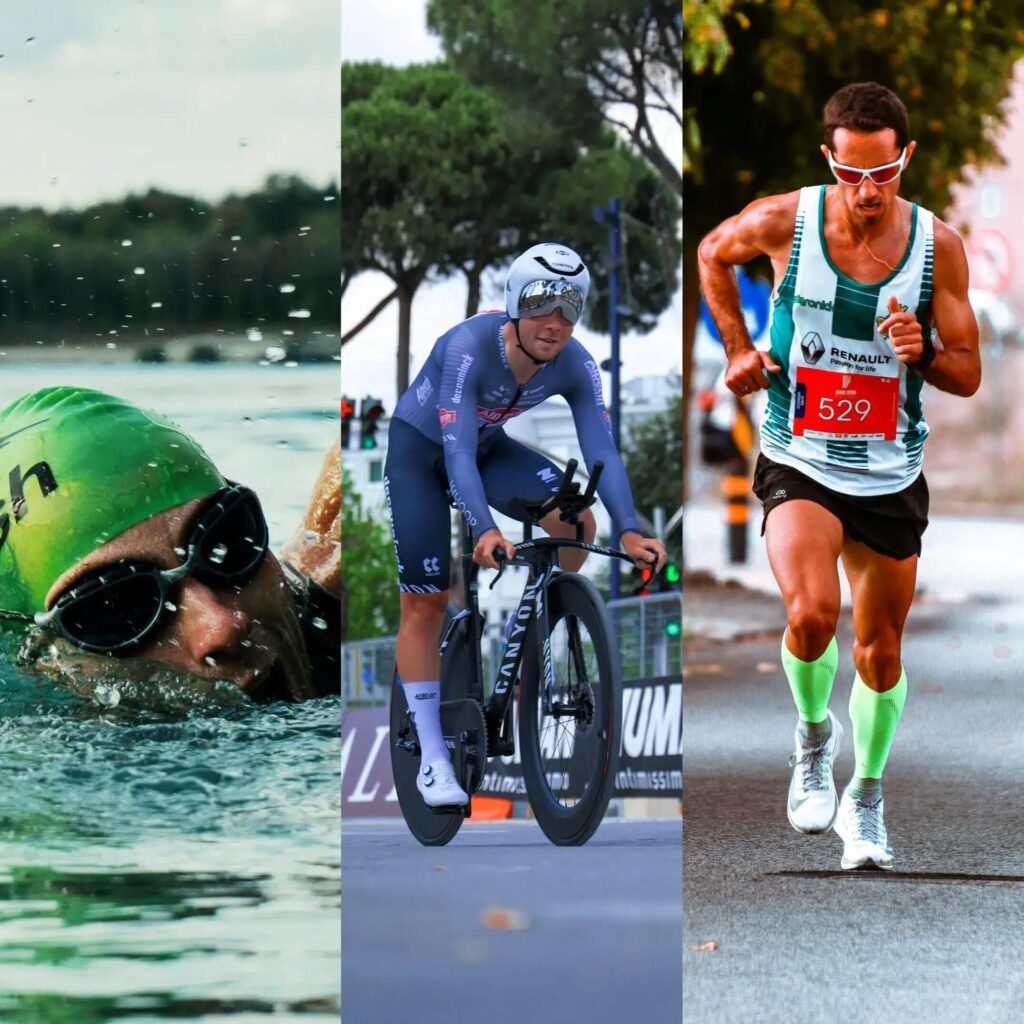
It is not the same as VO2 max. It is not just “having a big engine.” Durability is your ability to preserve your normal output after fatigue has accumulated. For runners, that might mean holding marathon pace after mile 20. For cyclists, it is producing steady power after several hours of riding. For triathletes, it is being able to run well after the swim and bike have already taken a bite out of the legs.
If your workouts look good when you are fresh but your races fall apart late, durability may be the missing piece.
What aerobic durability actually means
Aerobic durability describes how well your body maintains efficiency during prolonged exercise.
Early in a workout, you may run 8:00 miles at 145 beats per minute or ride 200 watts at a comfortable heart rate. Later, the same pace or power may require more effort. Heart rate rises. Breathing gets heavier. Stride mechanics change. Cadence drops. Fuel use shifts. The same output becomes more expensive.
This late-session decline is affected by several factors:
- Muscle fiber fatigue
- Glycogen depletion
- Heat accumulation and dehydration
- Neuromuscular fatigue
- Reduced running economy or cycling efficiency
- Pacing mistakes early in the session
Researchers often discuss this through the lens of “durability,” especially in cycling and long-course endurance events. The key idea is simple: two athletes may test similarly in the lab when fresh, but the more durable athlete performs closer to that level after prolonged work.
The practical signal: heart rate drift
You do not need a lab to spot durability issues. One useful field marker is heart rate drift, sometimes called aerobic decoupling.
Here is the basic idea: compare your pace or power to your heart rate over the first and second half of a steady endurance session. If pace or power stays the same but heart rate climbs a lot, your body is working harder to maintain the same output.
As a rough guide, many coaches use a drift of less than 5% during an easy aerobic session as a sign that the duration and intensity are well supported. A drift above that does not automatically mean the workout failed. Heat, hills, caffeine, dehydration, poor sleep, and accumulated fatigue can all influence the number. But repeated high drift on normal easy days is worth paying attention to.
Example:
- First 45 minutes: 8:30 per mile at 142 bpm
- Second 45 minutes: 8:32 per mile at 154 bpm
The pace barely changed, but heart rate rose 12 beats. That is useful information. It may mean the run was too long for your current base, the conditions were tougher than they looked, or you started slightly too fast.
Why durability matters more as races get longer
In short races, fresh fitness carries more weight. In long races, the question changes. It is not just “What can you do?” It is “What can you still do after fatigue has made everything less efficient?”
This is why durability matters for:
- Marathoners trying to avoid the late-race slowdown
- Ultrarunners managing long climbs and descents
- Cyclists preparing for gran fondos or long road races
- Triathletes who need to run well off the bike
- Masters athletes who recover well but may lose resilience if training is too intensity-heavy
Athletes often chase faster interval splits when the better question is: can you hold your normal aerobic output for longer without your body falling apart?
How to train aerobic durability
Durability is built through consistent, controlled exposure to longer aerobic work. The goal is not to turn every long session into a survival test. The goal is to teach your body to stay economical as duration increases.
1. Extend easy duration gradually
The simplest durability workout is a well-paced easy long run, long ride, or long aerobic swim.
Start with a duration you can finish without a major fade. Then extend it slowly. For many athletes, adding 10–20 minutes every couple of weeks is enough. You do not need a heroic jump from 90 minutes to three hours.
The key is restraint. If your heart rate climbs sharply, your form unravels, or the last 30 minutes become a grind, you may have found the edge of your current durability. That is not failure. That is your training signal.
2. Keep most durability work truly aerobic
Durability improves when you accumulate time without excessive stress. That usually means Zone 2 effort or an intensity where breathing is controlled and conversation is possible.
If you push too hard early, the session becomes a threshold workout in disguise. You may finish tired, but you will not necessarily build the quality you are targeting.
This connects with a broader training principle: hard work only pays off when it is placed well. If your week already contains intervals, hills, or race-pace work, avoid turning the long aerobic session into another hard day. The post Stop Stacking Stress: How to Space Hard Workouts for Better Endurance Gains covers that idea in more detail.
3. Add “finish steady” sessions
Once your base is solid, you can add controlled late-session work. This is not a fast finish where you empty the tank. It is a steady close where you maintain good mechanics under mild fatigue.
For runners:
- 75 minutes easy, with the final 15 minutes at steady marathon effort
- 90 minutes easy on rolling terrain, keeping effort even on climbs
For cyclists:
- 2.5 hours endurance, with 2 x 15 minutes at tempo in the final hour
- 3 hours mostly easy, holding smooth cadence in the final 30 minutes
For triathletes:
- Long ride followed by a short, relaxed run focused on rhythm
- Steady swim set after pre-fatiguing the shoulders with aerobic volume
The rule: finish feeling like you could do a little more. Durability grows best when you repeat quality sessions, not when one workout wrecks the next three days.
4. Practice fueling before you “need” it
Some late-session fade is not a fitness problem. It is a fueling problem.
For sessions longer than 90 minutes, practice taking in carbohydrate early and consistently. Many endurance athletes perform well with 30–60 grams of carbohydrate per hour. Trained athletes in longer events may tolerate 60–90 grams per hour, especially when using a mix of glucose and fructose.
You do not need race-level fueling for every easy session, but you should not treat long workouts as accidental fasts. If your heart rate drift improves when you fuel better, you have learned something important.
Signs you are building durability well
Durability gains are not always dramatic. They often show up quietly:
- Your long run pace feels smoother at the same heart rate
- Your power is steadier in the final hour of a ride
- You need less mental effort to hold form late
- Your recovery after long sessions improves
- You can finish steady without turning the workout into a race
It is also worth checking your body before these longer sessions. A short readiness scan can help you decide whether to proceed, shorten, or keep the day easier. For a simple framework, see The 10-Minute Readiness Check: How to Adjust Endurance Workouts Before They Go Wrong.
Do not confuse durability with toughness
This is where athletes get into trouble.
Durability is not proven by dragging yourself through a workout after your form has collapsed. It is not ignoring dehydration, limping through the final miles, or forcing pace because the plan said so.
The best durability training is controlled. You are looking for mild fatigue, not total depletion. You want enough stress to adapt, but not so much that your next week becomes damage control.
If late-session heart rate drift is high every week, sleep is poor, motivation is dropping, and easy days no longer feel easy, the answer is not more grit. The answer is usually less load, better fueling, more recovery, or a simpler week.
A simple durability session to try
Pick one endurance session each week and make it your durability builder.
Run: 70–100 minutes easy. Keep the first half relaxed. In the final 20 minutes, hold the same pace or slightly quicker without forcing effort. Watch whether heart rate stays controlled.
Bike: 2–3 hours endurance. Ride the first two-thirds conservatively. In the final third, hold steady power and smooth cadence. Avoid surges.
Swim: Main set of 3 x 800 or 4 x 600 at aerobic effort with short rest. Try to keep stroke count and pace consistent from first rep to last.
Repeat for four to six weeks before judging progress. Durability is built through patterns, not one standout workout.
The takeaway
Aerobic durability is the ability to stay efficient when fatigue arrives. It is what lets you use your fitness late in a race, not just display it when fresh.
Train it with patient long aerobic work, controlled steady finishes, smart fueling, and honest attention to heart rate drift. Keep the effort sustainable. Build the habit week by week.
The goal is not to become the athlete who can suffer the most in training. The goal is to become the athlete who fades the least when it matters.



Leave a Reply