

Most runners do not struggle because their hard workouts are too easy. They struggle because their easy days are not easy enough.
It feels productive to finish every run breathing hard, glancing down at a pace that looks respectable, and uploading something you are not embarrassed to share. But endurance fitness is not built by proving yourself every day. It is built by stacking the right stress at the right time, then recovering well enough to absorb it.
That is where the easy-day audit comes in. It is a simple way to check whether your recovery runs, aerobic rides, and low-intensity sessions are actually doing their job—or quietly turning into “sort-of hard” workouts that leave you flat when it matters.
Why easy really matters
Endurance athletes have known for years that a lot of successful training happens below threshold. Research on elite endurance athletes, including work popularized by exercise physiologist Stephen Seiler, has shown that many high-level runners, cyclists, rowers, and cross-country skiers spend roughly 80% of their training time at low intensity, with a smaller amount at moderate or high intensity.
This does not mean every athlete needs to follow a perfect 80/20 split. But the principle is useful: if you train hard too often, you limit how much quality work you can handle. Easy training builds aerobic capacity, improves fat oxidation, supports capillary development, and adds volume without the same recovery cost as intervals or tempo work.
The problem is that “easy” is easy to misjudge. A run that starts relaxed can drift into moderate effort. A group ride advertised as social can turn into a rolling race. A recovery swim can become a threshold set because you felt good after the warm-up.
Signs your easy days are too hard
You do not need a lab test to spot the warning signs. Look for these patterns over two to three weeks:
- Your “easy” pace keeps creeping faster, even when your plan does not call for it.
- You feel heavy or unmotivated before key workouts.
- Your interval pace is flat, but your easy pace looks impressive.
- You need more caffeine to feel normal before training.
- Your resting heart rate is elevated for several mornings in a row.
- You sleep enough but still feel under-recovered.
- You finish easy runs feeling like you “worked,” not refreshed.
One off day is normal. A pattern is information. If your low-intensity work is draining you, it is no longer low intensity in a useful sense.
The three-test easy-day audit
Use these three checks during your next easy session. They work for running, cycling, swimming, elliptical, rowing, or any aerobic cross-training.
1. The talk test
During an easy run or ride, you should be able to speak in full sentences without pausing to gasp. Not a few words. Not one sentence before needing to reset. Full, boring, conversational sentences.
Try this: after 15 minutes, say out loud, “I could hold this effort for a long time, and I do not feel like I am chasing the pace.” If you cannot say that comfortably, back off.
For swimmers, the talk test is trickier, but the principle still applies. Your breathing should feel controlled. If every wall feels like a rescue point, the set is not easy.
2. The heart rate ceiling
Heart rate is imperfect, but it is useful when paired with feel. For many endurance athletes, easy aerobic work sits around 60–75% of maximum heart rate, or below the first ventilatory threshold if you have tested it.
If you do not know your exact zones, set a conservative ceiling. For example, if your estimated max heart rate is 190, you might cap easy runs around 140–145 beats per minute. On hot days, hilly routes, or during heavy training blocks, you may need to slow down or walk short hills to stay there.
That is not failure. That is discipline.
3. The next-day check
An easy session should leave you ready for what comes next. Ask yourself the next morning:
- Do my legs feel normal for this stage of training?
- Is my mood stable?
- Did I sleep reasonably well?
- Could I complete today’s planned workout without forcing it?
If a supposedly easy day regularly makes the next day worse, it needs to be easier, shorter, or replaced with rest.
What easy should feel like by sport
Easy does not look exactly the same across disciplines. Here are practical examples.
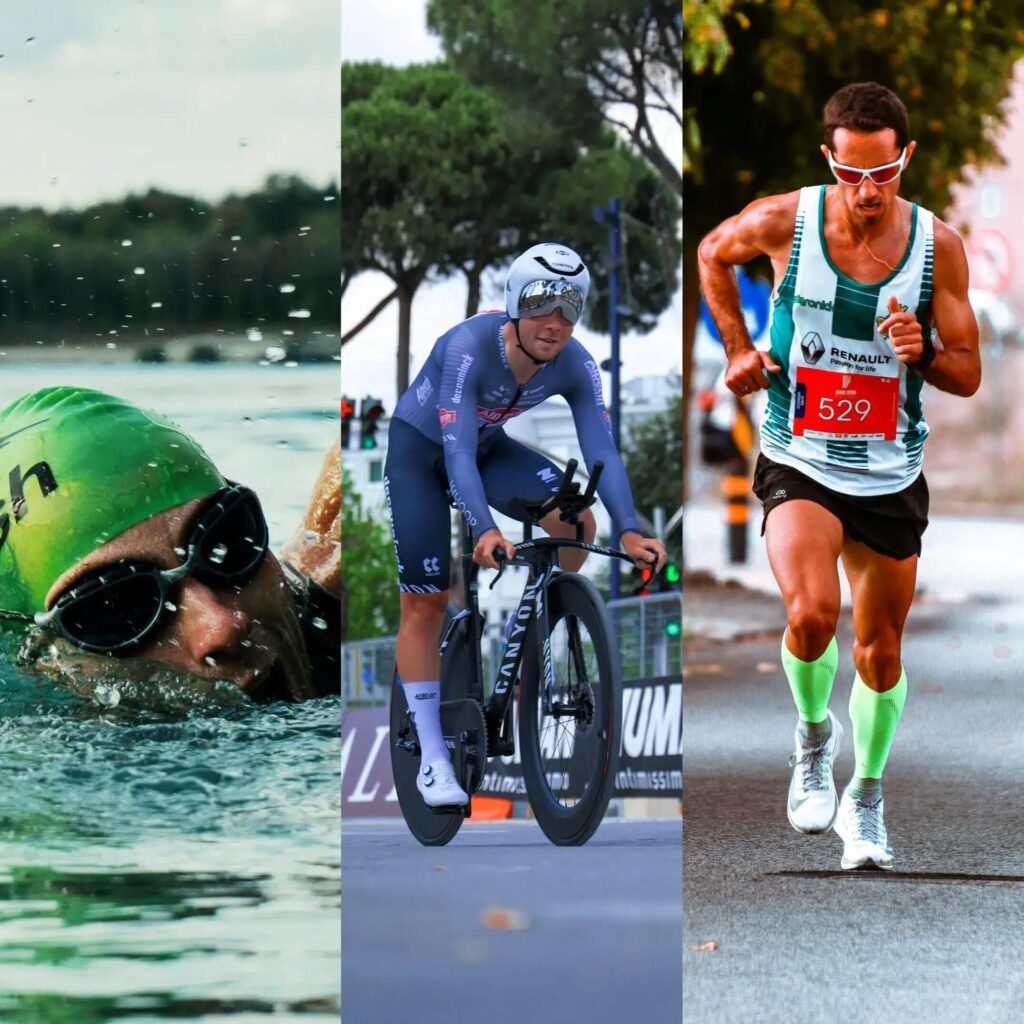
Running
For running, easy often feels slower than your ego wants. A runner aiming for a 45-minute 10K may still need easy runs in the 9:30–11:00 per mile range, depending on terrain, fatigue, heat, and experience. Pace calculators can help, but your body gets the final vote.
If your form falls apart when you slow down, use short relaxed strides after the run rather than turning the whole run into a moderate effort.
Cycling
On the bike, easy means keeping pressure light on the pedals. If you train with power, this is often Zone 1 to low Zone 2, roughly 55–70% of functional threshold power for many riders. You should not be surging over every roller or chasing faster wheels.
A true recovery spin may feel almost too easy for the first 20 minutes. That is the point.
Swimming
Easy swimming is smooth swimming. Instead of turning every session into a set of hard 100s, build technique-focused aerobic work: 8 x 200 relaxed with 20 seconds rest, or 20–30 minutes of continuous easy swimming with form cues. Think long strokes, steady breathing, and no panic at the wall.
How to fix an easy day that keeps getting too hard
If you keep drifting into moderate effort, change the setup.
- Choose flatter routes. Hills are useful, but not when they turn every recovery run into a strength session.
- Run or ride by time, not distance. “45 minutes easy” reduces the pressure to hit a pace.
- Leave the fast group once a week. Social training is great until it hijacks your plan.
- Use a heart rate alert. Let your watch beep before the effort gets away from you.
- Schedule easy days after hard days. They should support adaptation, not add another hidden workout.
- Walk when needed. Short walk breaks can keep the session aerobic, especially for newer runners or on hot days.
The goal is not to train slowly forever. The goal is to be fresh enough to train hard when the plan calls for hard.
A simple weekly example
Here is what this might look like for a runner training five days per week:
- Monday: Rest or mobility
- Tuesday: Intervals or hill repeats
- Wednesday: 40 minutes very easy
- Thursday: Short easy run plus strides
- Friday: Rest or strength training
- Saturday: Tempo, progression run, or race-specific workout
- Sunday: Long run at relaxed aerobic effort
The easy days are not filler. They are what make Tuesday and Saturday possible.
Final thoughts
If your progress has stalled, do not start by adding more intensity. Start by auditing your easy days.
Use the talk test. Set a heart rate ceiling. Pay attention to how you feel the next day. If your easy sessions are leaving you tired, make them easier before you make your plan harder.
Endurance training rewards patience. The athletes who improve year after year are not the ones who race every run or hammer every ride. They are the ones who understand the purpose of each session—and have the confidence to keep easy truly easy.



Leave a Reply