

If you run, cycle, swim or row, adding strength training can make you faster and more durable. This guide shows clear steps to combine strength work with endurance training. You will get simple plans, sample sessions, and tips you can use this week.
We focus on easy rules, short explanations, and real examples. The goal is to help you use strength training endurance ideas without confusing jargon. Let us jump in and make your training smarter and more fun.
Why strength training endurance helps
Strength training improves muscle force and makes movement more efficient. That means you use less energy at race pace. It also lowers the risk of injury by strengthening joints, tendons, and connective tissue.
Stronger muscles help you hold form when you are tired. For endurance athletes, that can mean faster finishes and fewer late-race slowdowns. Many athletes report better power on hills and sprints after a few weeks of consistent strength work.
Strength training also changes muscle fiber recruitment. You keep the endurance base, but you gain the ability to produce bursts of power. This is useful for surges in a race, quick accelerations, or short climbs.
Finally, adding a few high-quality strength sessions does not ruin endurance gains. With simple scheduling and good recovery, you get both endurance and strength. The rest of this article shows how to do that in practical steps.
Session structure for strength training endurance
Keep sessions focused and simple. A clear plan for each workout helps you balance load and recovery. Below are common session types and how to use them in an endurance program.
Use the list to pick sessions that fit your week. Start with two strength sessions and keep them short at first. That helps you stay fresh for key endurance workouts like long runs or tempo rides.
- Strength endurance: 2 to 3 sets of 12 to 20 reps. Use bodyweight or light weights. Good for recovery weeks and off-season.
- Max strength: 3 to 5 sets of 3 to 6 reps. Use heavy loads and full recovery. Place these sessions away from hard endurance days.
- Power: 3 to 5 sets of 3 to 6 reps done fast. Examples include jump squats or kettlebell swings. Use when you want to improve sprinting or hill power.
Finish sessions with mobility and a short cooldown. Keep total time to 30 to 45 minutes when you are starting. That is enough to get gains without excessive fatigue.
Weekly sample plan: strength training endurance
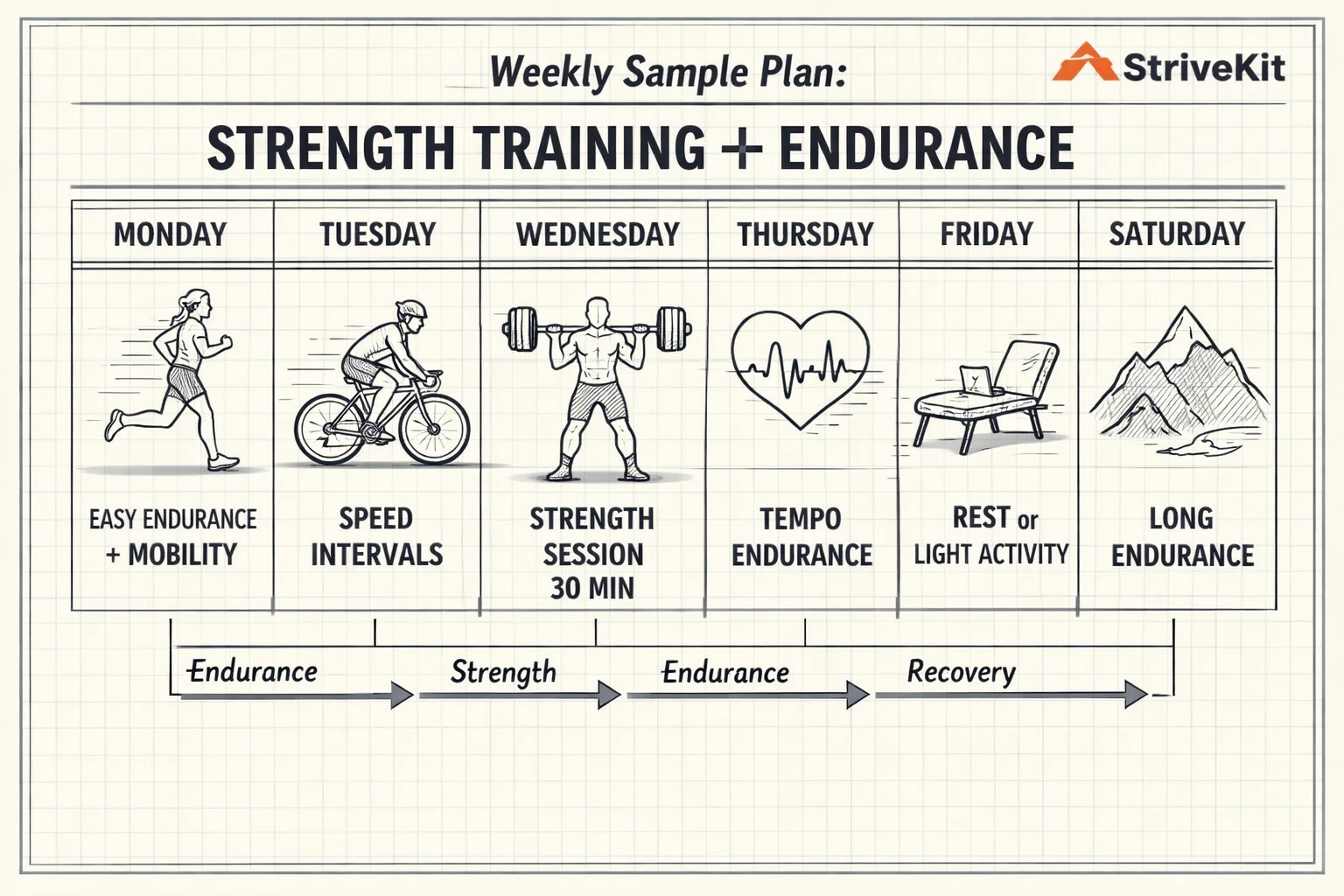
Below is a practical weekly plan you can test. The plan keeps key endurance sessions intact while adding two short strength sessions. Adjust the plan to fit your training load and race goals.
Use this example as a template, not a rule. Everyone adapts differently. If you feel too tired, reduce load or swap a session for active recovery.
- Monday: Easy endurance + mobility
- Tuesday: Speed or intervals on the bike or track
- Wednesday: Strength endurance session (30 minutes)
- Thursday: Tempo or steady-state endurance
- Friday: Rest or light activity
- Saturday: Long endurance session
- Sunday: Max strength or power session, done away from the long session
For athletes short on time, look at the idea of How To Maximize Your Training In Under 30 Minutes. Use focused work and strong recovery to keep gains. You can also do short workouts on busy days and still make progress.
Programming tips and recovery
Plan strength sessions when you are not doing your hardest endurance work. This avoids stacking fatigue on top of an important workout. For example, do max strength on easy endurance days or after full rest days.
Recovery matters as much as the work. Sleep, nutrition, and easy days help you adapt. If you skip recovery, gains stall and injury risk rises. Keep weekly volume steady and increase load slowly over weeks.
Track simple metrics like session RPE, sleep, and energy. These tell you if you should back off. Also consider the training type that fits your sport; for some athletes, power work is more useful than high-volume strength.
When planning sessions, think about interval vs steady-state work in your endurance plan. Both have value, but they stress the body differently. Match your strength work to the type of endurance load you will face in races or events.
Exercise choices and progression
Pick compound exercises that transfer to your sport. Squats, deadlifts, lunges, single-leg moves, and hip hinge patterns give big benefits. These moves improve force production and stability during long efforts.
Begin with bodyweight or light load and learn good technique. That reduces injury risk and builds a base. Progress by adding load, reps, or sets every 2 to 3 weeks. Small, steady increases work best.
If you have limited time, focus on effective workouts that meet the biggest needs. A 30-minute session with a mix of strength and power drills can be very productive. You can also build a block of four weeks that emphasises strength, then return to higher endurance volume.
Include mobility and core work each week. These parts help you hold efficient posture and reduce pain. Simple moves done consistently produce big gains over months.
Key Takeaways
Combining strength training and endurance is a smart move for most endurance athletes. It builds power, protects against injury, and keeps you faster late in races. Start small and stay consistent to see steady gains.
Use two focused strength sessions per week and place them around your hardest endurance days. Keep sessions clear and short when needed. Try short workouts and time-efficient options to fit busy weeks.
Progress slowly, track recovery, and emphasise quality over quantity. With this approach you can enjoy the best of both worlds: endurance fitness and stronger, more powerful muscles.
Remember, real change takes weeks of steady work. Use the ideas here to build a program that fits your life and your goals. Keep testing, adjusting, and enjoying the process of getting stronger while maintaining endurance.
Leave a Reply to Top Endurance Training Mistakes That Slow Progress – StriveKit Cancel reply