
Performance management
Breaking down the data: Empowering everyday athletes with the simple insights that fuel real progress
Tracking your progress shouldn’t feel like a math test. While many apps just show you how many miles you’ve run, StriveKit looks under the hood to show you how your body is actually responding to your training.
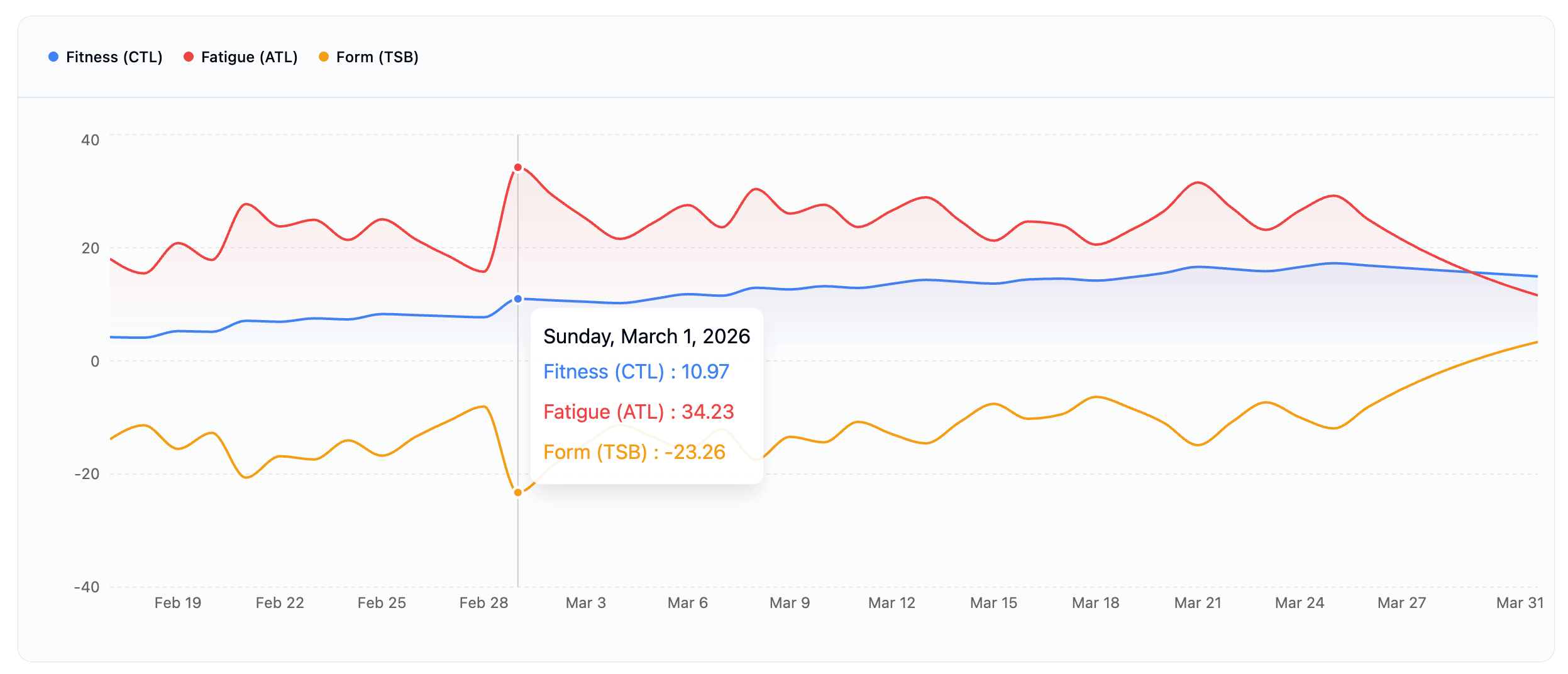
How it works
Getting started is as easy as syncing your data and we’ll take care of the rest, no math required. Every time you do a workout, we analyze your data to give the workout a simple “effort score.” These scores are then automatically used to update your personal performance chart, allowing you to watch your fitness climb and your daily energy levels shift in real-time.
Why athletes love it
This feature is a game-changer for everyday athletes because it replaces guesswork with confidence. To keep you on the road and out of the clinic, our “danger zone” visibility will let you know if you’re increasing your training intensity too fast for your body to handle. When race day eventually arrives, you can use your readiness score to time your rest perfectly, so you show up to the start line feeling completely fresh and ready for a new personal best.
What we show you
The Big Picture: Fitness (CTL)
Think of this as your “engine.” This metric looks at everything you’ve done over the last six weeks to show your total baseline fitness.
- What it means: When this line goes up, your engine is getting bigger and stronger.
- Why it matters: It helps you see that long-term progress, even when a single run feels slow or tough.
The Feeling: Fatigue (ATL)
This tracks how hard you’ve pushed yourself in the last week. It represents the immediate stress on your body.
- What it means: This number rises quickly after a long run or a hard interval session. It’s a scientific way of saying, “I’m tired!”
- Why it matters: By watching your fatigue, you can avoid “overdoing it” and prevent injuries before they happen.
The Balance: Readiness (TSB)
This is the “magic number” for athletes. It’s the balance between your Fitness and your Fatigue.
- What it means: If your Fitness is high but your Fatigue is low, you are “Fresh” and ready to perform your best.
- Why it matters: This tells you exactly when you’re ready to set a new Personal Best (PB) or when you definitely need a recovery day.