

Getting the whole family active can be fun and productive. This article shows how to use outdoor family activities to build endurance, keep kids engaged, and make healthy habits that last. Read on for clear steps, easy sessions, and safety tips you can use right away.
Benefits of outdoor family activities
Outdoor family activities help hearts, lungs, and muscles grow stronger. When a family moves together, each person gets steady aerobic work. Endurance improves in small, repeatable ways that add up.
These activities also build routine. Regular sessions teach children to expect movement as part of their day. That steady practice helps stamina rise without stress.
Time outdoors reduces screen time and boosts mood. Fresh air and natural light help kids and adults recover from mental fatigue. This makes it easier to stick with a plan.
Lastly, shared activity strengthens family bonds. Working toward a common goal, like a longer hike or a bike ride, creates pride and motivation. That social boost helps endurance training become a habit instead of a chore.
Best outdoor family activities for endurance
Choosing the right mix of activities keeps things interesting and effective. Look for options that allow different fitness levels to join in. That way everyone can challenge themselves in a safe way.
Below is a clear list of outdoor family activities that build aerobic fitness, coordination, and stamina. Each item includes a short idea on how to adapt intensity for children and adults.
- Hiking: Start with short trails and add distance gradually. Use varied terrain to increase effort. Let kids set a comfortable pace and add short walking intervals to build endurance.
- Cycling: Ride on bike paths or quiet roads. Parents can set steady effort zones while kids pedal at their own speed. Group rides teach pacing and make longer distances manageable.
- Interval games: Play tag, relay races, or timed sprints mixed with walking. Short bursts of higher effort followed by rest raise aerobic capacity quickly and keep kids engaged in family workouts.
- Swimming: Swim laps, play water polo-style games, or do repeat circuits. Water reduces joint stress and lets kids in workouts push effort in a safe setting.
- Orienteering and scavenger hunts: These add walking or light jogging to mental challenges. Families cover more ground while practicing navigation, which extends active time without boredom.
- Trail running: For families with older kids, trail runs build strength and cardiovascular fitness. Start with short runs and mix in walking to keep effort steady.
Each of these activities can be scaled. Adjust distance, time, and rest to match ages and fitness. The goal is steady progress, not a single long push.
Use simple tracking like time spent moving or steps taken. Tracking helps you plan gradual increases in effort and keeps motivation high.
How to plan effective family endurance sessions
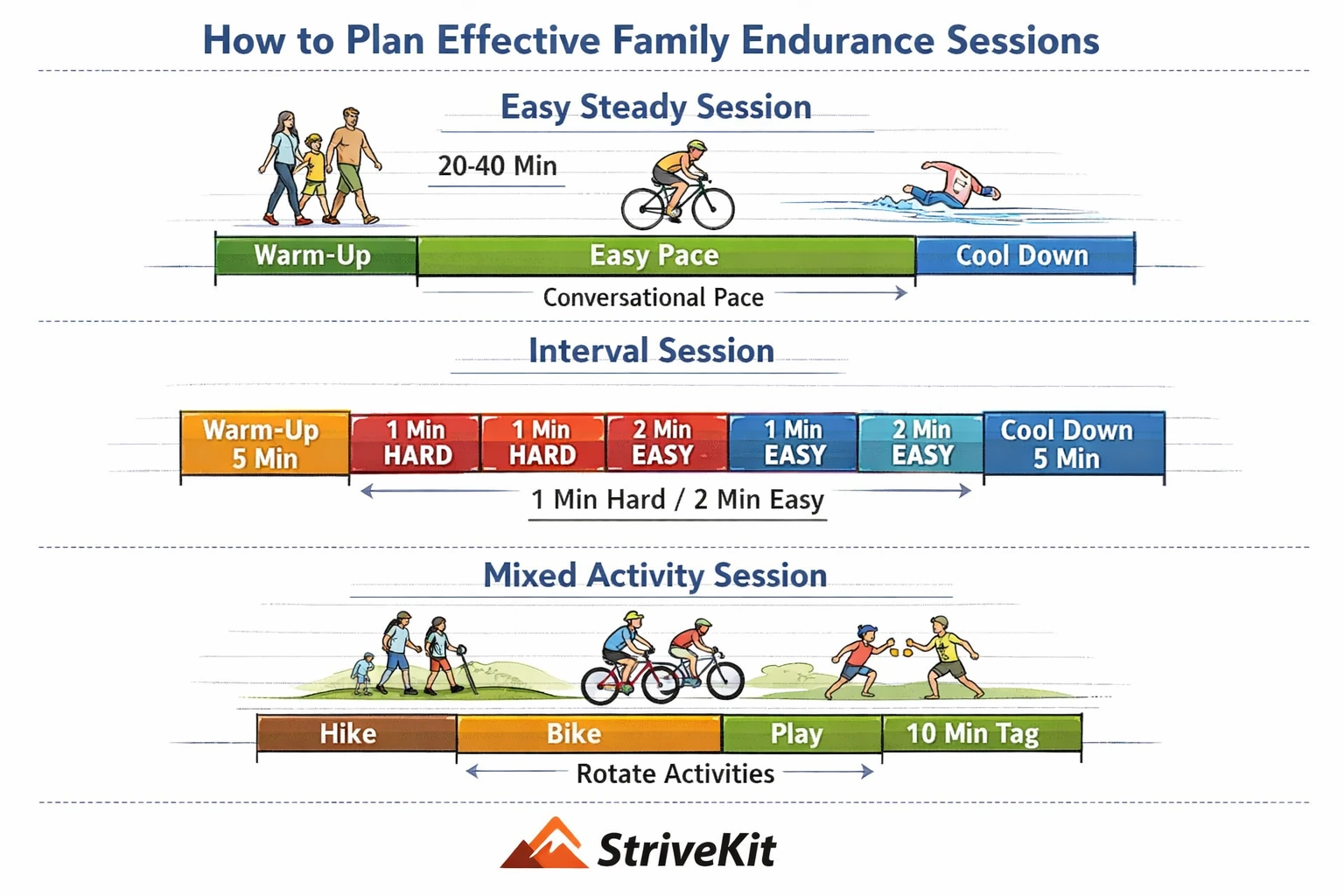
Good sessions have structure. Start with a short warm-up, include a main activity block, and end with a cooldown. Structure helps prevent injury and makes sessions feel purposeful.
Here are sample session ideas that are simple to run and easy to adapt for different ages and abilities. Use these patterns and change time or intensity to keep progress steady.
- Easy steady session: 20 to 40 minutes of walking, cycling, or easy swimming. Keep pace conversational so everyone can talk while moving.
- Interval session: Warm-up 5 minutes, then 6 to 8 rounds of 1 minute hard effort and 2 minutes easy movement. Finish with a 5-minute cooldown. Great for short family workouts.
- Mixed activity session: Combine 10 minutes hiking, 10 minutes cycling, and a 10 minute game like tag. Rotating activities keeps kids in workouts and reduces boredom.
Plan frequency around family schedules. Two to four sessions a week gives steady gains without overwhelming school and work. Rest days help recovery and reduce burnout.
Progress by small steps. Increase duration by 5 to 15 percent each week or add one interval per session. Small changes are easy to follow and build long-term endurance.
Safety, gear, and motivation tips
Safety comes first. Check weather, wear suitable clothing, and carry water and basic first-aid. For cycling, always use helmets and lights when needed. Proper gear makes activity safe and comfortable.
Know each child’s limits and offer choices. Give them roles like navigator or pace leader. That sense of control keeps motivation high and reduces resistance to regular activity.
Use positive feedback and small rewards. Celebrate milestones such as longer time moving or a new trail completed. These wins build confidence and encourage consistent effort.
Make endurance training playful. Combine exercise with games, nature tasks, or simple challenges. Fun keeps kids coming back, which is the most reliable way to improve fitness over time.
Key Takeaways
Outdoor family activities make endurance training practical and fun. Pick activities that match your family’s interests and fitness levels to keep everyone involved. Use short warm-ups, steady sessions, and gradual progress to reduce injury risk.
Include a mix of steady-state sessions and interval-style games. Track time or distance in simple ways and celebrate improvements. These habits will help endurance grow over weeks and months.
Keep safety and enjoyment at the center. With helmets, water, sun protection, and praise, families can build fitness together. Start small, stay consistent, and enjoy the journey as a group.
Try one new outdoor family activity this week and see how it feels. Small steps lead to big gains when a family trains together.
Leave a Reply