

Starting to run can feel exciting and a little scary. This post gives clear, friendly guidance on what to expect and how to begin. You will get simple steps, smart choices, and easy routines to help you stick with it.
Getting started
Begin with small goals. Pick a realistic first week, like three short sessions of run-walk. Keep the pace easy. Talk to yourself kindly and stay curious about how your body feels.
It helps to set a clear reason for running. Maybe you want more energy, clearer thinking, or a way to relieve stress. A clear reason keeps you going when motivation dips. Write that reason down and revisit it each week.
Another key is consistency. Short runs done often beat long runs done once in a while. Try to make running a habit by picking set days and times. That makes it easier to keep up without overthinking it.
Here are a few Beginner running tips that many new runners find useful. These tips are simple and can be used from the first week.
Building a safe habit
Start slowly and build up. Your body needs time to adapt. A steady, measured plan prevents pain and keeps you motivated. Aim to increase your total weekly time or distance by about 10% at most.
Before a list of habit steps, read this: these actions help form a reliable routine and reduce injury risk. Follow them in order and adjust to how you feel.
- Warm up with five minutes of walking and gentle leg swings.
- Alternate running and walking in the first weeks, such as 1 minute run, 2 minutes walk.
- Keep at least one full rest day each week for recovery.
- Track your sessions in a simple notebook or app to see progress.
- Celebrate small wins like a week of consistency or a small distance increase.
Consistency builds confidence. When you follow these steps for a month you will likely notice improved mood and steadier breathing. Adjust the mix of run and walk based on how you feel.
If you feel persistent pain, take more rest and consider checking with a professional. Pain that lasts or grows is your body’s signal to pause and reassess training load.
Training plan basics
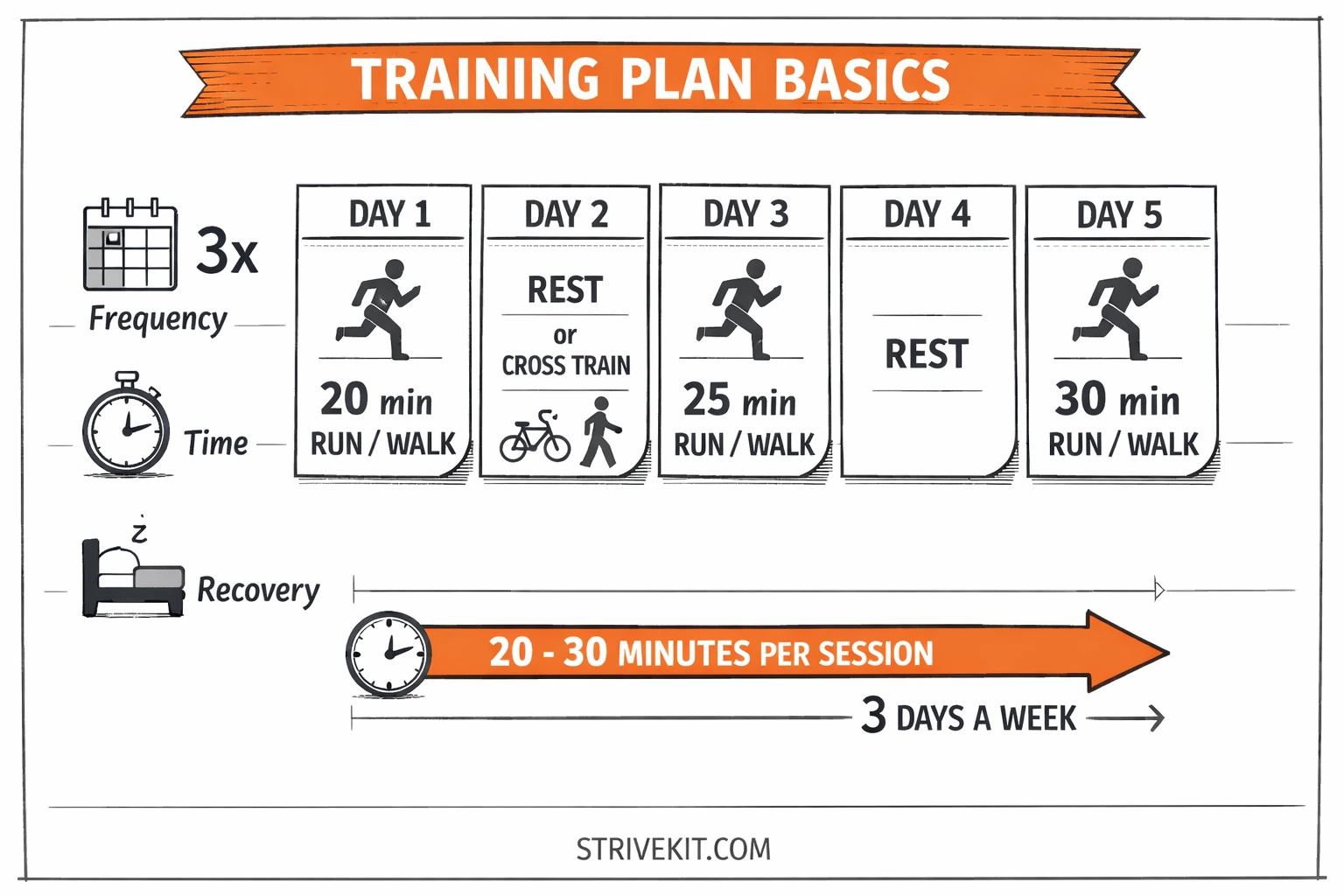
A simple plan beats a complicated one. Focus on three things: frequency, time, and recovery. Keep sessions short at first. Aim for three sessions per week, each 20 to 30 minutes long, and build from there.
When planning sessions, mix easy runs with a slightly longer run each week. This mix helps your body adapt while keeping training fun. Use the phrase Beginner running strategies as a quick mental note to keep plans simple and steady.
Here is a basic sample week to use as a guide. Read the brief notes that come before the list. This sample is flexible and meant for new runners with no recent running history.
- Day 1: 20 minutes run-walk (easy effort).
- Day 2: Rest or light cross-training like gentle cycling or walking.
- Day 3: 25 minutes run-walk, a few more running minutes than Day 1.
- Day 4: Rest. Day 5: 30 minutes steady pace or alternating run and walk to total 30 minutes.
As weeks pass, increase the running portions of each session by small steps. Keep one day fully easy or resting to let your body recover and adapt to the new load.
Remember to vary surfaces if you can. Soft trails or tracks are easier on joints than hard concrete. Variation also keeps workouts interesting and reduces repetitive strain.
Gear and recovery
You do not need fancy gear to start. Focus on comfort and fit. A good pair of running shoes that match your gait and foot shape is the best investment. Clothing should be breathable and suited to the weather.
Below is a quick list of essential items and why they matter. Read the short lead-in sentence that explains the choices. These items support safety and comfort during early running weeks.
- Running shoes: get fitted if possible for comfort and support.
- Moisture-wicking socks: prevent blisters and stay dry.
- Light layers: dress for comfort and adjust as you warm up.
- Simple watch or phone timer: helps track session time and progress.
Recovery matters as much as the run itself. After sessions, do light stretching and a short walk to cool down. Hydrate and aim for steady sleep to support adaptation.
Include foam rolling and gentle mobility work on rest days. These actions help muscle tissue recover and reduce stiffness. Small, regular recovery steps pay off over months.
Common mistakes and how to fix them
New runners often push too hard too soon. This leads to fatigue and injury. The fix is to slow the pace, shorten sessions, and add more rest. Simple changes prevent long setbacks.
Below is a list of common mistakes and practical fixes. Read the clear lead-in sentence first. Each item pairs a common error with an easy change that keeps progress steady.
- Pushing pace too early — slow down and focus on time on feet.
- Skipping rest days — build rest into the plan and treat it as important.
- Ignoring pain — reduce load and seek advice if pain persists.
- Chasing fast results — follow steady, small increases instead.
Another frequent issue is comparing yourself to others. Each body adapts at its own rate. Use your own progress as the benchmark and celebrate steady steps forward.
Finally, be patient and curious. Running builds both fitness and mental resilience. Small, regular wins add up to big changes over months.
Key Takeaways
Start small and stay consistent. Short, regular sessions beat occasional long efforts. Use easy runs and steady increases to protect your body and keep progress steady.
Pay attention to gear and recovery. A good shoe, sensible clothing, and simple cool-downs make running more enjoyable and more likely to last. Apply Beginner running tips for daily practice and habit building.
Keep plans simple and clear. Use Beginner running strategies to guide weekly choices. With steady steps and the right habits, running can become a reliable source of strength and joy.
Leave a Reply