

Ready to enjoy cycling? This guide gives clear, friendly advice for new riders. Read short, useful steps on gear, fit, safety, skills, training, and basic care. Follow these tips to feel confident on your first rides.
Getting started
Starting feels exciting and a little scary. You do not need an expensive bike to begin. A safe, well-maintained bike and some basic gear let you ride with confidence.
Before you head out, learn the basic controls. Know how the brakes feel. Learn how to shift gears on gentle roads. Practice mounting, dismounting, and stopping in an open area.
Below are the essential items new riders should have to start with comfort and safety. Read each item and think about what you need for your first rides.
- Helmet that fits snugly and sits level on your head.
- Comfortable clothing or padded shorts for longer rides.
- Spare tube, tire levers, and a small pump or CO2 inflator.
- Water bottle and a simple snack for rides over 30 minutes.
- Basic lights and a bell if you will ride near traffic.
Bike fit and gear
A proper bike fit makes riding easier and reduces soreness. You can adjust seat height, handlebar reach, and cleat position if you use pedals with clips. Try small changes and test them on short rides.
If possible, have a shop check your fit. A few minutes of expert advice can save weeks of discomfort. If a shop is not available, use simple checks like a slight bend in the knee at the bottom of the pedal stroke.
Here are quick checks to confirm a good fit. Use these points to tune your bike before longer rides.
- Seat height: heel on pedal at lowest point should give a straight leg.
- Reach: you should not feel overstretched when holding the bars.
- Handlebar height: a bit higher gives comfort, lower improves speed.
- Brake reach: fingers should cover brake levers comfortably.
- Tire pressure: check recommended PSI on the tire sidewall before each ride.
Riding skills and safety
Good habits keep you safe and let you enjoy riding more. Practice balance and braking in a quiet area. Learn to look around without swerving. Ride predictably so others can guess your path.
When you ride near cars, stay visible and keep a steady line. Use hand signals to show turns and stops. Always assume drivers may not see you and give yourself space to react.
Use the simple list below to build core skills. Spend time on each skill until it feels natural.
- Look ahead and scan left and right before intersections.
- Brake smoothly; use both brakes for controlled stops.
- Shift early before steep hills or changes in speed.
- Practice cornering by slowing, looking through the turn, and pedaling smoothly.
- Ride with a buddy or group to learn pacing and road rules.
Training and progression
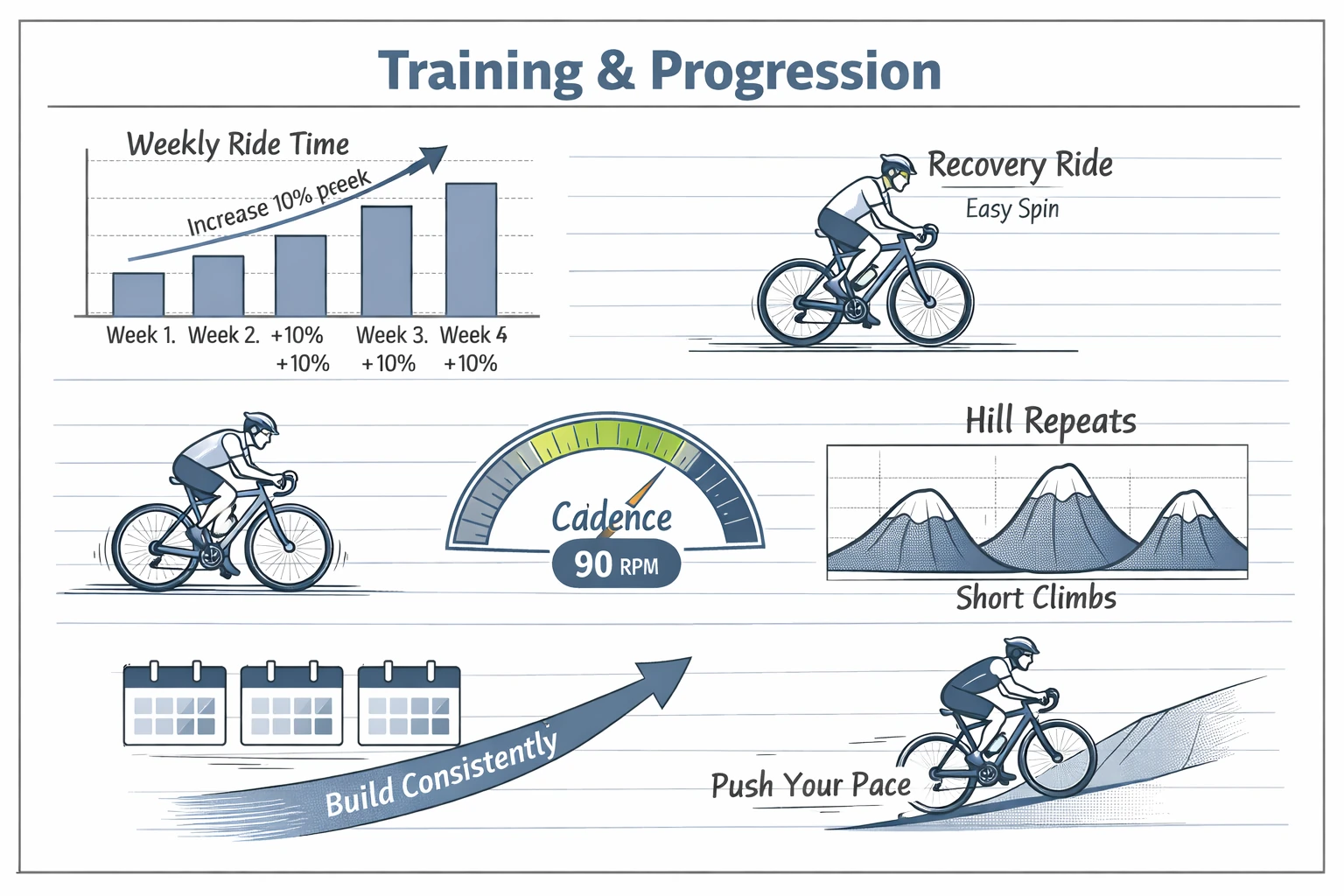
Start with short, regular rides rather than one long ride. Small gains add up fast. Aim for three short rides per week and increase duration slowly.
Mix easy rides with one ride that pushes your pace a bit. Rest matters. Recovery days help muscles adapt and make you stronger. Be patient and celebrate small steps.
These practical tips help new riders build fitness and skill safely. You may notice that lessons from other sports also help, such as some Beginner running strategies and Beginner running tips that teach pacing and consistency. The ideas from Beginner running learnings can be useful when you plan steady progress.
- Follow a plan: increase total ride time by no more than 10% each week.
- Include an easy recovery ride after a hard effort.
- Work on cadence: aim for a smooth pedal stroke at a comfortable rpm.
- Practice short hill repeats to build strength gradually.
- Use Beginner cycling strategies like steady progress and consistency.
Maintenance basics
Simple care keeps your bike reliable and makes rides less stressful. A quick pre-ride check takes two minutes and can prevent flats or mechanicals. Learn a few basic repairs slowly.
Cleaning the chain and keeping moving parts lightly oiled extends component life. Tighten bolts on handlebars and seatpost and check tire wear. Small chores save time and money later.
Here are the basic checks to do before and after rides. These steps lower the chance of getting stranded and teach you to notice changes in your bike.
- Quickly spin wheels to check for wobbles or brake rub.
- Check tire pressure and inspect tires for cuts or embedded glass.
- Test brakes for solid, consistent stopping power.
- Listen for unusual sounds when pedaling or shifting gears.
- Clean and lightly lubricate the chain every few rides, more in wet weather.
Key Takeaways
Start with the basics: a safe bike, a good fit, and a helmet. Practice control and simple repairs. Short, steady rides build skill and fitness faster than rare long rides.
Safety and consistency matter more than speed. Learn to read the road, signal clearly, and be visible. Use rest days and plan gradual progress to avoid injury and stay motivated.
Enjoy the ride. Cycling is a skill you can grow over time. Keep these tips close, practice regularly, and celebrate each improvement. Your confidence will rise with every ride.
Leave a Reply