

Hydration recovery matters for anyone who trains, works hard, or wants to feel better fast. This article shows clear steps to help you use fluids, salts, and simple routines to improve recovery after exercise or long days. You will learn how to plan, measure, and fix common problems.
Why hydration recovery matters
Good hydration recovery keeps muscles working and helps you feel less sore after activity. When you replace lost fluid you restore blood flow and help nutrients reach damaged tissue. That speeds the repair process and helps you bounce back to training or work.
Hydration also controls body temperature and reduces the load on the heart. If you are under-hydrated, your heart works harder. That delays recovery and increases fatigue. Restoring fluid makes daily tasks and workouts feel easier again.
Proper hydration recovery supports the immune system and energy levels. Small changes in fluid balance can change how you sleep and how you feel the next day. A steady plan helps you avoid dips in performance and keeps recovery steady.
Using simple steps for hydration recovery can reduce injuries and missed sessions. You do not need complex gear. Basic habits create big benefits over time and make training more consistent and enjoyable.
How hydration supports recovery
Water is the medium for nearly every chemical reaction in the body. It carries oxygen and glucose to tired muscles. That helps muscle fibers rebuild and reduces cramps. Hydration recovery puts the building blocks in place for repair.
Electrolytes like sodium, potassium, and magnesium help regulate muscle contraction and fluid balance. When you lose electrolytes through sweat, replacing them helps muscles relax and recover. Remember the importance of electrolytes when planning fluids after long sessions.
Hydration improves nutrient delivery and waste removal. Fluids help the lymphatic system and kidneys clear waste byproducts that build up after exercise. When these byproducts move out faster, soreness can be less severe and recovery speeds up.
Good hydration also affects mood and sleep. Nighttime repair needs fluid balance. If you are dehydrated, sleep can be lighter and shorter. Restoring fluids supports better sleep and better recovery the next day.
How to optimize hydration recovery
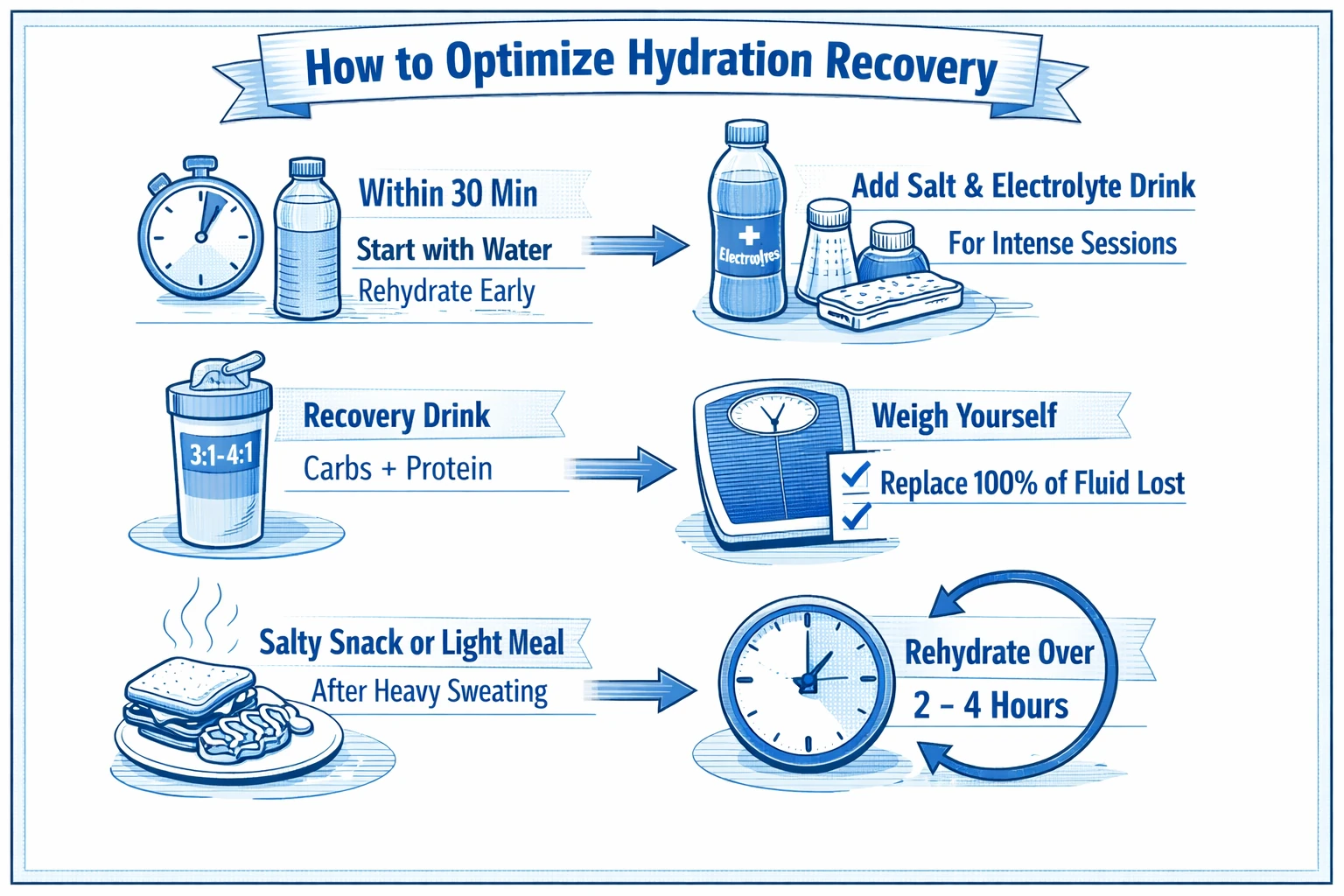
To optimize hydration you need a plan that matches your activity, climate, and body. Start with simple targets and adjust based on sweat and performance. Small, steady habits beat big, rare corrections.
Below are practical steps you can follow after training or long work sessions. Use them as a checklist to rebuild fluid and electrolyte balance quickly.
- Start with water within 30 minutes of finishing activity to replace immediate losses.
- For longer or intense sessions, add a drink with electrolytes or a small snack that contains salt to replace sodium. This helps fluid stay in the body.
- Use recovery drinks when you need carbs and protein quickly after long sessions. A drink with a 3:1 or 4:1 carb to protein ratio can speed glycogen restoration and support muscle repair.
- Measure weight loss to guide intake: aim to replace 100% of fluid lost over 2 to 4 hours rather than trying to drink a huge volume at once.
- Consume salty foods or a light meal with fluids if you had heavy sweating. This supports longer-term balance and reduces the chance of cramps.
Keep a routine for daily hydration, not only after workouts. That helps you arrive at training or matches already in a good state and reduces the extra demand on your recovery process.
Common hydration mistakes and how to fix them
People often make predictable hydration mistakes that slow recovery. Knowing these errors helps you avoid them and recover faster. Here are the common faults and simple fixes.
Many skip electrolytes after heavy sweating. They drink lots of plain water and feel bloated or lightheaded. The fix is to add small amounts of sodium and potassium with a snack or an electrolyte solution.
Another mistake is overdrinking or chugging large volumes all at once. This can cause stomach upset and poor absorption. Drink smaller amounts more often and include salt or a carbohydrate source to help retain fluid.
Finally, some wait too long to rehydrate. Delaying replacement makes it harder to restore balance and slows muscle repair. Start rehydration within the first 30 minutes and keep it steady for a few hours.
Hydration for different athletes
Hydration needs change by sport and duration. Sprinters, team sport players, and endurance athletes have different patterns of sweat, energy use, and recovery. Tailor your plan to the activity and heat level.
Endurance athletes often need more structured plans and may use targeted strategies. For example, a runner with long training days should learn Top Recovery Techniques For Busy Endurance Athletes that include planned fluid and fueling windows.
Strength athletes may focus more on muscle repair and less on huge fluid volume. Still, timing around sessions and adding protein and small amounts of carbs can improve outcomes. Coaches and athletes also benefit from reviewing diet plans for athletes that include hydration timing.
Recreational exercisers should keep it simple: regular water intake, a salty snack after big sweat sessions, and attention to urine color and body weight changes. Small steps add up and help steady progress.
Monitoring and measuring hydration
Use simple checks to guide hydration recovery. Urine color, body weight before and after training, and how you feel are reliable cues that tell you if you are on track. Track these over time for patterns.
Weighing yourself before and after sessions shows how much fluid you lost. Each 1 pound lost equals about 0.45 liters of fluid. Replace that fluid gradually to restore balance. This method is practical and evidence based.
Pay attention to the importance of electrolytes when sweat loss is high. Sweat tests and sweat-rate estimates can refine your plan. But you can start by using salty snacks and electrolyte solutions if you sweat heavily or train for long periods.
Consider tracking how your body reacts to different fluids and foods. Keep notes on performance, soreness, and sleep quality. This helps you fine-tune choices and better predict needs for future sessions.
Key Takeaways
Hydration recovery is a basic but powerful tool to speed repair and maintain performance. Use steady habits, replace fluids and salts, and time intake to support muscle repair and energy restoration.
Simple checks like urine color and body weight guide when to drink more. Small, frequent sips and the right electrolyte balance work better than rare large volumes. Recovery drinks can help after long or intense sessions.
Avoid common hydration mistakes such as waiting too long, ignoring electrolytes, or chugging fluids. Make small adjustments that match your sport, climate, and sweat rate. These changes add up quickly.
Start with clear targets and adjust as you learn how your body responds. With a consistent plan, hydration recovery will become part of your routine and make training and daily life easier and more enjoyable.
Leave a Reply