

Choosing the right workout types can change how you feel and how fast you reach your goals. This article explains the main options and shows simple ways to pick the best routine for your life. Read on to learn clear steps you can use today.
Why mix different workout types
Different workout types target different parts of fitness. Some build strength. Others boost heart health. When you mix types you get a balanced plan.
Mixing helps prevent boredom. One week of the same routine can feel stale. Changing the focus keeps you motivated and consistent. That helps results over time.
Using several workout types also reduces injury risk. If one muscle group gets too much stress, another type can let it recover. That balance helps you train more often without setbacks.
Finally, mixing gives steady progress. Cardio and strength work together. Flexibility and mobility support good movement. A varied plan makes fitness gains more reliable.
Common workout types
There are a few main workout types most people start with. Each type has clear benefits and a simple way to try it. Below you will find the core options and what they do for your body.
Deciding which to try first depends on your goals. If you want to build muscle, strength work is key. If you want weight loss and stamina, add cardio. For daily ease of movement, focus on flexibility and mobility.
Here is a short list of common workout types and a single-line note on what each emphasizes. Read the notes to match a type to your goal.
Choose from the list below based on your primary goal and current fitness level. The list shows typical examples and how they help.
- Strength training – Uses weights or bodyweight to build muscle and bone strength.
- Cardio – Activities like running, cycling, or brisk walking to improve heart and lung fitness.
- High-intensity interval training (HIIT) – Short bursts of intense effort with rest to burn calories and improve speed.
- Flexibility – Stretching routines and yoga to increase range of motion and reduce tightness.
- Mobility and balance – Moves that improve joint control and reduce fall risk, useful for all ages.
- Sport-specific training – Skill and conditioning work for athletes or hobby sports.
How to pick the right workout types
Start by naming your top one or two goals. Keep the list short. Examples are getting stronger, losing weight, or moving without pain. A clear goal makes choosing easy.
Next, consider your time and schedule. Some workout types need longer blocks, like steady cardio or long strength sessions. HIIT can fit into tighter days. Match the type to your week.
Think about what you enjoy. If you hate running, cardio on a bike may be better. Enjoyment matters because you will stick with the routine longer when you like it.
Finally, test and adjust. Try one or two workout types for four weeks and track how you feel. If progress stalls or you dread sessions, switch the mix. Small changes lead to big benefits.
Sample weekly plan using multiple workout types
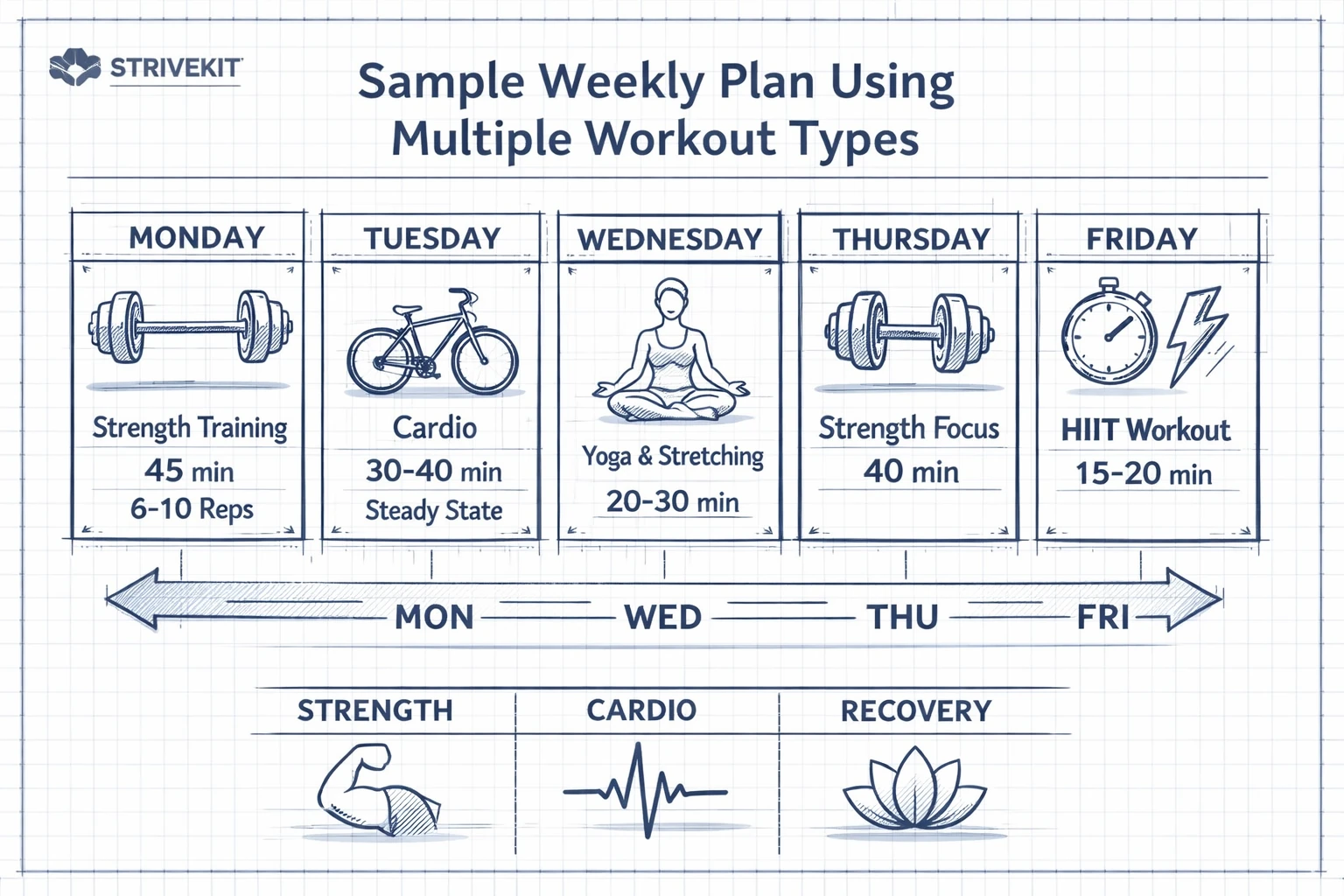
A simple weekly plan can show how to combine workout types without overdoing it. Below is a basic layout that balances strength, cardio, and recovery for most people.
This plan uses three core workout types and two recovery-focused sessions. It gives structure while leaving room for personal changes and progression.
Before the list you will see a short note on intensity. Keep two strength days moderate to heavy, one cardio day steady, and one session HIIT if you feel ready. Rest days are active recovery days.
Adjust the days to fit your schedule and swap activities that match your interests. The goal is consistent effort and steady recovery.
- Monday – Strength training (full body) 45 minutes, moderate weight and 6 to 10 reps.
- Tuesday – Cardio steady state 30 to 40 minutes, cycling or brisk walking.
- Wednesday – Active recovery and flexibility, gentle yoga or stretching 20 to 30 minutes.
- Thursday – Strength training (upper or lower focus) 40 minutes, controlled movements.
- Friday – Short HIIT session 15 to 20 minutes, simple intervals like sprints or circuits.
- Saturday – Mobility work and light activity, easy hike or balance drills.
- Sunday – Rest or light walking. Let the body recover and prepare for the next week.
Key Takeaways
Choosing between workout types starts with clear goals and a realistic schedule. Know what you want and pick the types that support that aim. Keep the plan simple and flexible.
Mixing strength, cardio, and flexibility gives the best overall results. Each type helps the others. A balanced plan reduces injury risk and keeps progress steady.
Test a routine for a few weeks and make small changes. Track how your body responds. Enjoyment matters so pick movements you can do regularly.
Use the sample weekly plan as a starting point. Adjust intensity, swap activities, and build on small wins. With the right mix of workout types you can make fitness a lasting habit.
Leave a Reply