

Ready to get results with clear workout plans? This article shows simple, practical steps to plan training, pick the right workouts, and keep improving. Read on to learn how to build a plan you will follow with confidence.
Why use structured plans
Structured workout plans make training easier to follow. They set clear goals, define effort, and reduce guesswork. When you know what to do each day, you waste less time and get better results.
Structured plans help with balance. You can blend strength, cardio, and recovery in a smart way. That balance lowers the risk of injury and keeps you fresh for more training sessions.
They also track progress. When a plan has clear milestones, you can see growth over weeks. Small wins motivate continued effort and build confidence.
Finally, a plan helps with focus. On busy days, you will rely on the plan instead of guessing what to do. That consistency leads to steady gains and better long term health.
Create workout plans
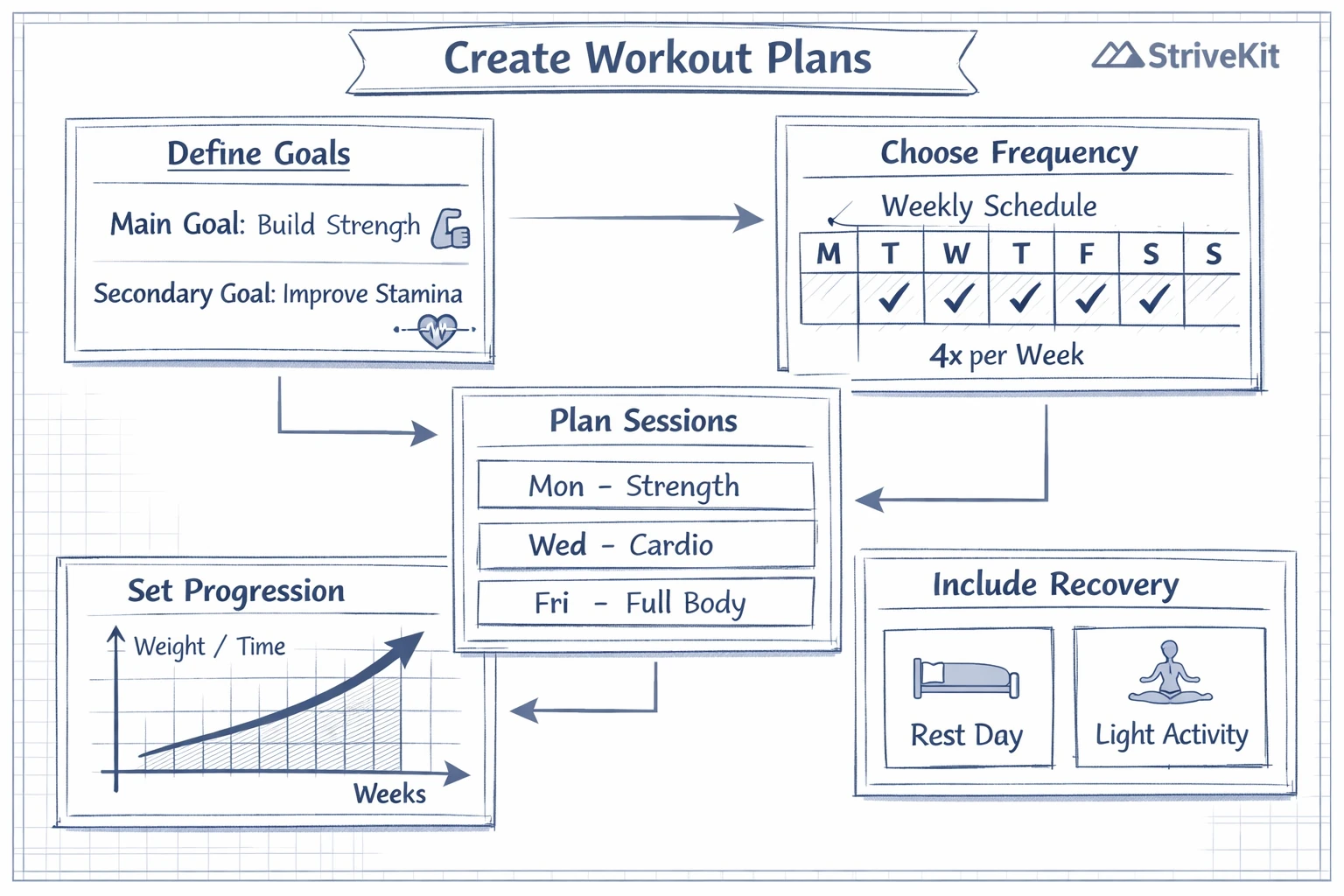
Start by setting one or two clear goals. Goals guide how you build the plan. Keep them specific and realistic. For example, aim to gain strength or improve stamina. Do not set too many goals at once.
Next, pick a simple schedule. Choose days you can commit to and how long each session will be. A common pattern is three to five sessions per week. Choose a pace you can keep for months.
Follow these basic steps to structure your plan. Each step is short and practical so you can use it right away.
- Define goals: pick one main goal and a secondary goal.
- Choose frequency: set how many sessions per week you will do.
- Plan sessions: assign each day a focus like strength or cardio.
- Set progression: decide how to increase load or time each week.
- Include recovery: add rest days and light sessions.
After you build the week, test it for two to four weeks. See how your body reacts and if you can keep the schedule. Adjust small parts rather than rewrite everything.
Sample plan
Here is a simple sample plan you can follow. It covers strength, cardio, and recovery so you get steady improvement. Use it as a starting point and make it fit your life.
Monday: full body strength, 45 minutes. Focus on compound moves and good form. Keep reps in a range that feels challenging.
Wednesday: moderate cardio, 30 to 40 minutes. Easy to moderate pace to build aerobic base. Add light mobility work after the session.
Choose workout types
Choosing the right workout types matters a lot. The type you pick should match your goal. Strength training builds muscle. Cardio builds endurance. Mobility keeps you moving well.
Below is a clear list of common options. Read each one and match it to your main goal. Pick two or three types to blend into your week.
- Strength training: lifts and bodyweight moves for muscle and power.
- Cardio sessions: running, cycling, rowing or brisk walking to improve heart fitness.
- Interval training: short bursts of high effort that raise capacity quickly.
- Flexibility and mobility work: stretching and joint drills to reduce stiffness.
- Endurance workout plan: long, steady efforts for stamina and fat burning.
Mixing types prevents boredom. It also helps you get well rounded fitness. Use strength and cardio in the same week for balanced gains.
If you are new, start with easier versions and build from there. Pick a pace you can repeat week after week and then increase intensity slowly.
Adjust workout plan
Adjustment is part of smart training. As you improve, you must change the plan so progress continues. Adjustment keeps the plan fresh and aligned with your life.
Watch simple signals to know when to change the plan. If you stall in progress, feel constant tiredness, or lose interest, those are signs to tweak the schedule. Small tweaks often work best.
Here are practical ways to adjust workout plan. Use one change at a time and test it for a week or two before changing more. This keeps results clear and steady.
- Change volume: cut or add a set or a few minutes per session.
- Alter intensity: shift to heavier weights or longer intervals.
- Swap exercises: try different moves to target the same muscle.
- Shift frequency: add one easy session or take an extra rest day.
Make adjustments based on both data and feel. Track reps, time, or heart rate. Pair that with how you feel after sessions. That combo gives the best decisions.
Key Takeaways
Good workout plans are clear and simple. They state goals, set a schedule, and include progression. Keep plans realistic so you can stick to them over months.
Mix workout types to build a balanced fitness base. Include at least one strength day and an endurance workout plan when stamina is a goal. Add mobility work to stay resilient and pain free.
Finally, review and adjust often. Learn to notice signs to change the plan. When you adjust workout plan carefully, you protect progress and stay motivated. Keep it steady, keep it smart, and enjoy the results.
Leave a Reply