

Meet a busy parent who wanted to get fit while keeping family life strong. This fitness case study shows the simple plans, time hacks, and steady steps that worked. Read on to learn practical actions you can try.
About this fitness case study
This section explains who took part and why the plan mattered. The parent in this study is a full-time worker and caregiver. They had limited time and needed a clear, easy plan.
The goals were clear. Build strength, gain energy, and keep stress low. The plan used short workouts, realistic meal choices, and set habits. That made it possible to stay consistent.
Data was tracked weekly. Weight, sleep, mood, and exercise minutes were logged. Small wins were celebrated. This helped keep motivation high without adding pressure.
The approach was simple and repeatable. It avoided extreme diets and long workout sessions. This case study focuses on steady progress and real life, not perfection.
Daily routine in this fitness case study
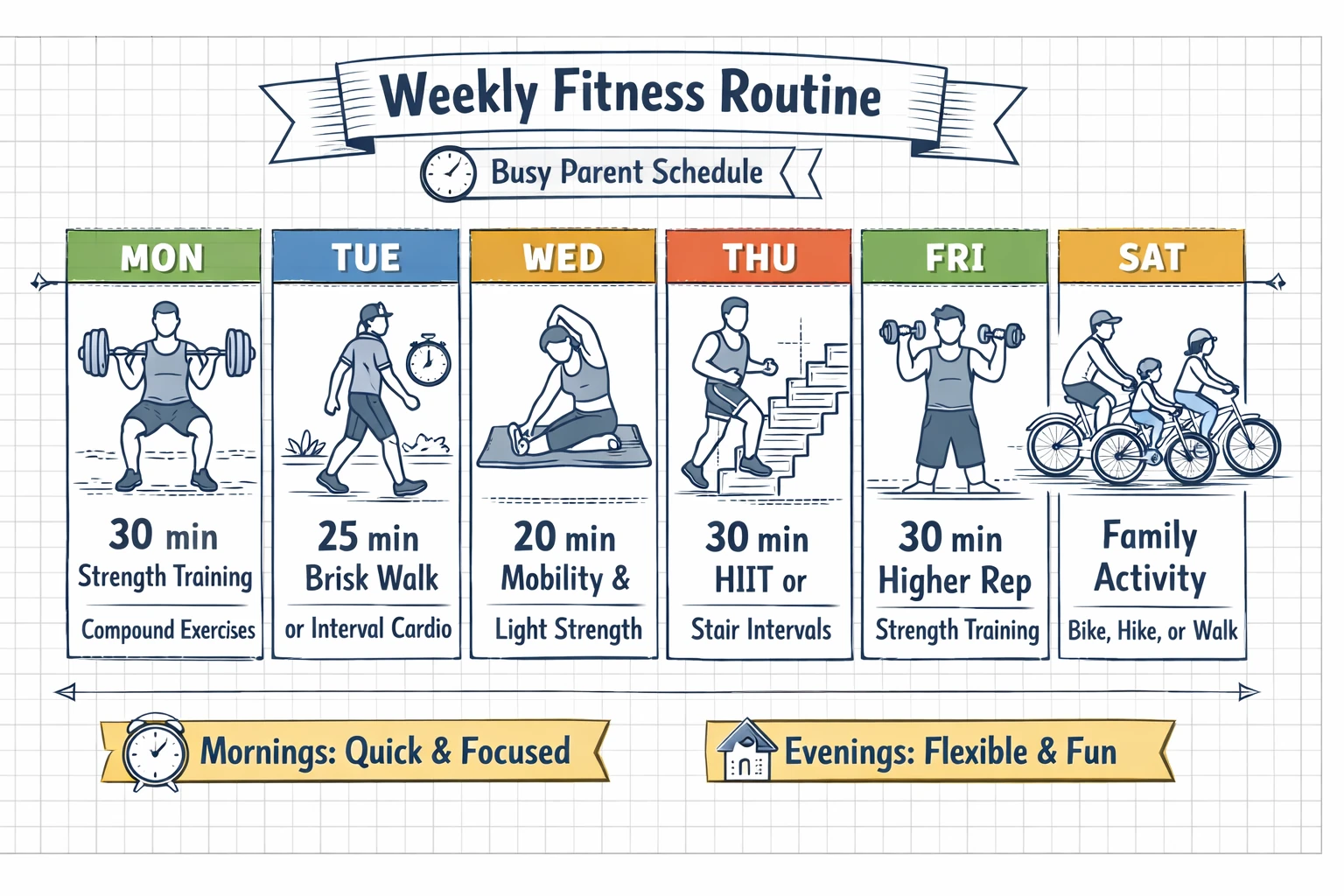
The daily routine was built around a busy schedule. Mornings were short and focused. Evening routines were flexible. This kept work and family time balanced with exercise.
Workouts were mostly 20 to 40 minutes. They mixed strength and cardio. Short workouts made it easy to fit exercise into a busy day. Rest days were planned and gentle movement was used to recover.
Here is the weekly plan used as a guide. Read the short introduction below before the list.
The weekly plan kept variety and recovery in mind. It balanced strength, cardio, and mobility to reduce injury risk and keep progress steady.
- Monday: 30 minutes strength (full body), focused on compound moves
- Tuesday: 25 minutes brisk walk or interval cardio
- Wednesday: 20 minutes mobility and light strength
- Thursday: 30 minutes HIIT or stair intervals
- Friday: 30 minutes strength with higher reps
- Saturday: Family activity – bike ride, hike, or long walk
- Sunday: Active rest – stretching and easy movement
Short sessions were paired with practical habits. The parent prepared a quick warm-up and a post-workout stretch. That routine cut decision fatigue and increased consistency.
Nutrition and time management
Nutrition focused on simple, real food. Meals were prepped ahead and snacks were planned. This reduced the temptation to grab fast food on busy days.
Portion control and balanced meals were emphasized. Each meal included protein, vegetables, and a healthy carb. This supported energy and recovery for the 20 to 40 minute workouts.
Before the list, note that meal prep was a key time saver. The parent used two main strategies that made healthy eating easy during the week.
- Batch cook two main meals on Sunday to cover several dinners
- Prep snack bags with nuts, fruit, and cut vegetables for grab-and-go options
- Keep a simple breakfast rotation: yogurt and fruit, eggs and toast, or oats with protein
Time management included small, repeatable blocks of focus. Workouts were scheduled like appointments. Meal prep was done in one session. This freed up mental energy for parenting and work.
The plan also used flexible timing. If morning did not work, a short evening session was used. This built a habit without breaking family routines.
Overcoming common fitness challenges
Parents face many obstacles. This part of the fitness case study focuses on real problems and clear solutions. Small, concrete changes made a big difference.
Common issues included fatigue, inconsistent sleep, and unpredictable schedules. The parent minimized these by setting realistic goals and prioritizing sleep when possible. They also used micro-workouts on hectic days.
Below is a list of practical strategies used in the study. Read the lead-in sentence first for context.
These strategies target common barriers so parents can keep moving forward. They are simple and repeatable.
- Plan three short workouts per week and accept shorter sessions when needed
- Use family time as active time to include kids in movement
- Limit long social media scrolling to preserve time for healthy habits
- Track only a few metrics like weekly workout minutes and sleep hours
- Learn from fitness mistakes parents often make, such as overdoing workouts or skipping recovery
Motivation was maintained by celebrating small wins. The parent noted progress in energy and mood rather than fast weight loss. That kept pressure low and joy high.
When plateaus appeared, adjustments were small. Workouts were tweaked, protein intake was checked, and sleep habits were improved. These small shifts helped break stagnation.
Results and lessons from the fitness case study
After three months the parent reported steady improvements. Energy rose, mood improved, and strength increased. These wins came from a consistent, manageable plan.
Results were tracked with simple tools. A calendar and a basic journal were enough. The focus stayed on habits rather than quick fixes. That approach built lasting change.
Key lessons included the value of planning and the power of short sessions. Sticking to a few realistic rules produced steady gains without stress. The family also benefited from shared active time.
This fitness case study shows that a busy parent can make meaningful progress. The path was not perfect, but it was workable and enjoyable.
Key Takeaways
Here are the main points to remember from this fitness case study. These takeaways are easy to apply.
Before the list, understand that small steps lead to big change. Use the tips that match your life and timeline. Consistency matters more than intensity.
- Make workouts short and consistent: 20 to 40 minutes, three to five times per week
- Prep simple meals to avoid poor food choices on busy days
- Turn family time into active time to build habits together
- Track a few metrics and adjust slowly to avoid common fitness mistakes parents make
Try one change at a time. Keep the plan simple and repeatable. With steady actions, fitness can fit into family life.
Use this fitness case study as a model, not a rulebook. Adapt it, keep it simple, and enjoy steady progress.
Leave a Reply