

Looking for active time that brings everyone together? family workouts are a great way to move, play, and build healthy habits as a group. This post gives clear, practical ideas you can try at home or outside, with tips to keep every age safe and smiling.
Each option is simple and can be adjusted for children and adults. Read on to learn how to start, stay safe, and enjoy exercise as a family.
Why family workouts
Family workouts improve fitness and also strengthen bonds. When parents and kids exercise together, routines feel fun instead of a chore. Regular shared exercise helps everyone feel more connected and confident.
These sessions teach good habits early. Children who see adults move and enjoy activity are more likely to keep moving as they grow. That makes family workouts a powerful habit builder for life.
Family workouts give a chance to model healthy choices. You can set a relaxed pace, celebrate small wins, and keep the mood positive. This helps children learn that movement is natural and enjoyable.
Getting started
Set a simple plan before you begin. Choose a time that fits your family routine, like after dinner or on weekend mornings. Keep sessions short at first, 15 to 30 minutes, and build from there.
Make safety a priority. Warm up with gentle movements and check footwear. If you have younger children, pick low-impact options and supervise closely. Adjust intensity to suit each person.
Keep it fun and flexible. Let kids pick a game or an exercise sometimes. Rotate leaders so everyone gets a turn. This keeps interest high and helps build teamwork during family workouts.
Top 10 family workouts
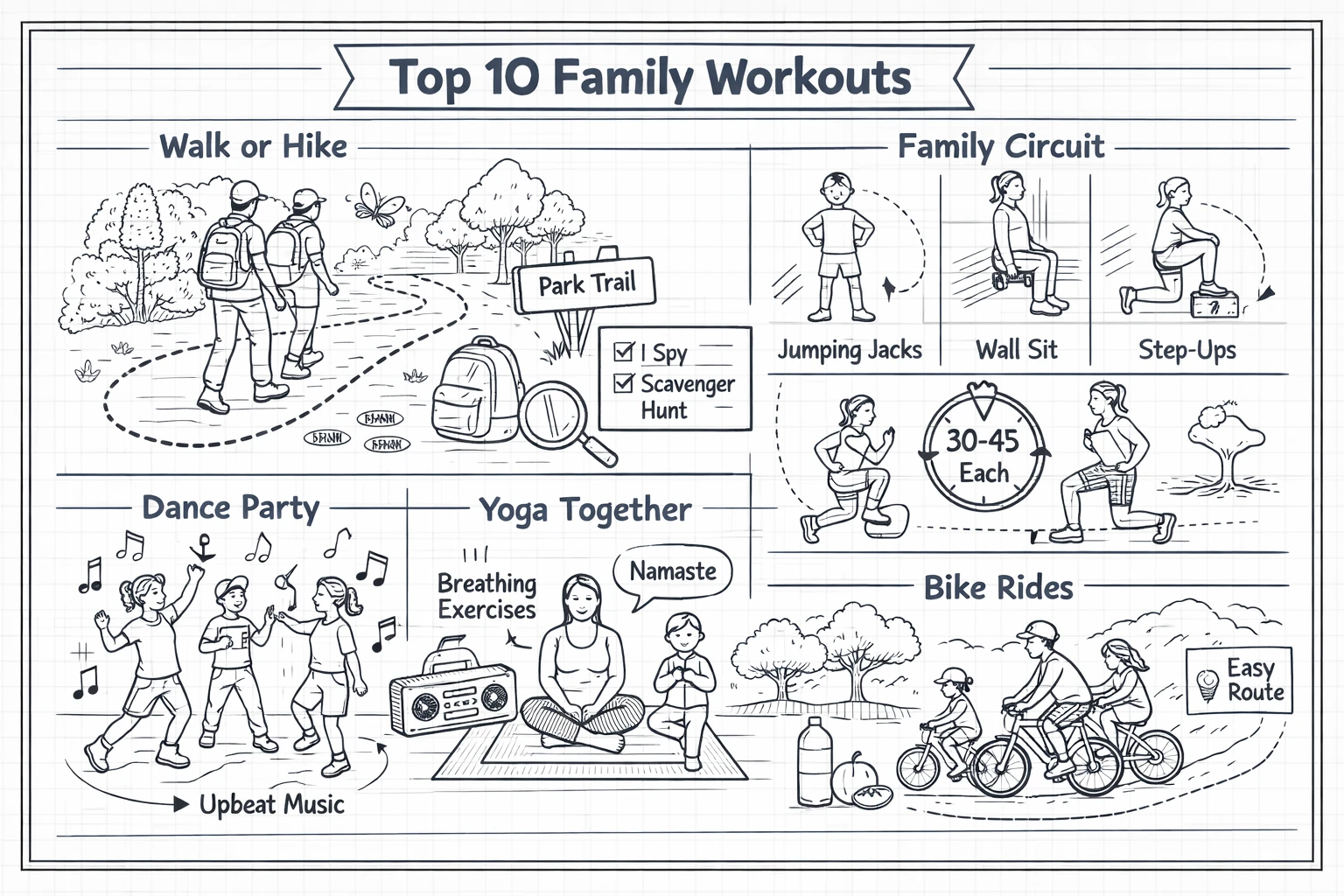
Below are ten easy and fun family workouts you can try. Each idea includes a short explanation and simple ways to modify it for ages and abilities. Read the brief tips, pick a few favorites, and plan a weekly routine that fits your family.
- Walk or hike
Walking is low cost and easy to scale. Choose a nearby park or a nature trail. Take breaks to explore and play simple games like I spy. For kids, add a scavenger hunt to keep them engaged.
- Family circuit
Set up short stations: jumping jacks, wall sits, step-ups, and stretches. Spend 30 to 45 seconds at each station and repeat two or three rounds. Change stations to fit kids in workouts and adult levels.
- Dance party
Play upbeat songs and dance for 20 to 30 minutes. Let each family member choose a track. This boosts cardio and lifts mood quickly. Use simple moves so everyone can join in.
- Yoga together
Family yoga builds balance and calm. Try basic poses and include breathing exercises. Use games like name-that-pose to keep children interested. Yoga can also help with bedtime routines.
- Bike rides
Biking gives great cardio and time outdoors. Pick safe, level routes for younger riders. Pack water and small snacks. Turn short rides into an adventure with stops at playgrounds.
- Obstacle course
Create a backyard or living room course with cushions, cones, and tape. Add crawling, hopping, and balancing tasks. Time each run and let kids try to beat their best. This builds strength and coordination.
- Relay races
Use teams for relay races that mix speed and skill. Try sack races, spoon-and-egg relays, or family baton runs. These are playful and promote cooperation and friendly competition.
- Ball games
Play catch, soccer, or basketball in a park or driveway. Adjust rules for skill levels so everyone feels successful. Ball games improve coordination and give lots of short bursts of activity.
- Strength circuit
Use bodyweight moves like squats, lunges, push-ups, and planks. Keep rounds brief and add fun goals like counting reps out loud together. Offer easier options for younger kids and harder options for adults.
- Active chores
Turn chores into a family workout. Raking leaves, gardening, or washing the car can be active and useful. Set a timer and work together. This teaches children that activity can be part of daily life.
How to keep it safe and fun
Always warm up before more active sessions. Five to ten minutes of light marching, arm circles, and leg swings prepares the body. Warm ups reduce soreness and lower injury risk.
Listen to each family member. If someone needs rest, offer a lighter role like counting reps or timing rounds. This keeps pressure low and keeps children positive about exercise.
Celebrate effort, not perfection. A high five or a small reward keeps motivation strong. Keep sessions consistent and short enough to fit busy days. That helps family workouts become a lasting habit.
Key Takeaways
Family workouts make exercise more fun and sustainable. They combine fitness, learning, and social time in a simple package. Try different ideas until you find what your family enjoys the most.
Start small and grow gradually. Short walks, a dance break, or a backyard circuit can make a big difference when done regularly. Include kids in workouts and give them choices to keep engagement high.
Make safety and enjoyment your focus. With clear plans and playful goals, family workouts can become a favorite part of your routine. Celebrate progress and enjoy moving together.
Leave a Reply