Busy endurance athletes need simple systems that work. This article explains clear, practical time management techniques to fit training into a full life. Read on for steps you can use today to balance work, family, and big training goals.
Time management techniques: Priorities
Start by setting one to three training priorities each week. Keep priorities simple. They guide what to keep and what to skip when time gets tight.
Write them down in a place you check daily. A short list works better than a long plan. You will find it easier to protect the most important sessions this way.
Use your training priorities to shape your week. If you must miss a session, choose the lower priority one. This creates focus and steady progress over time.
Plan efficient workouts
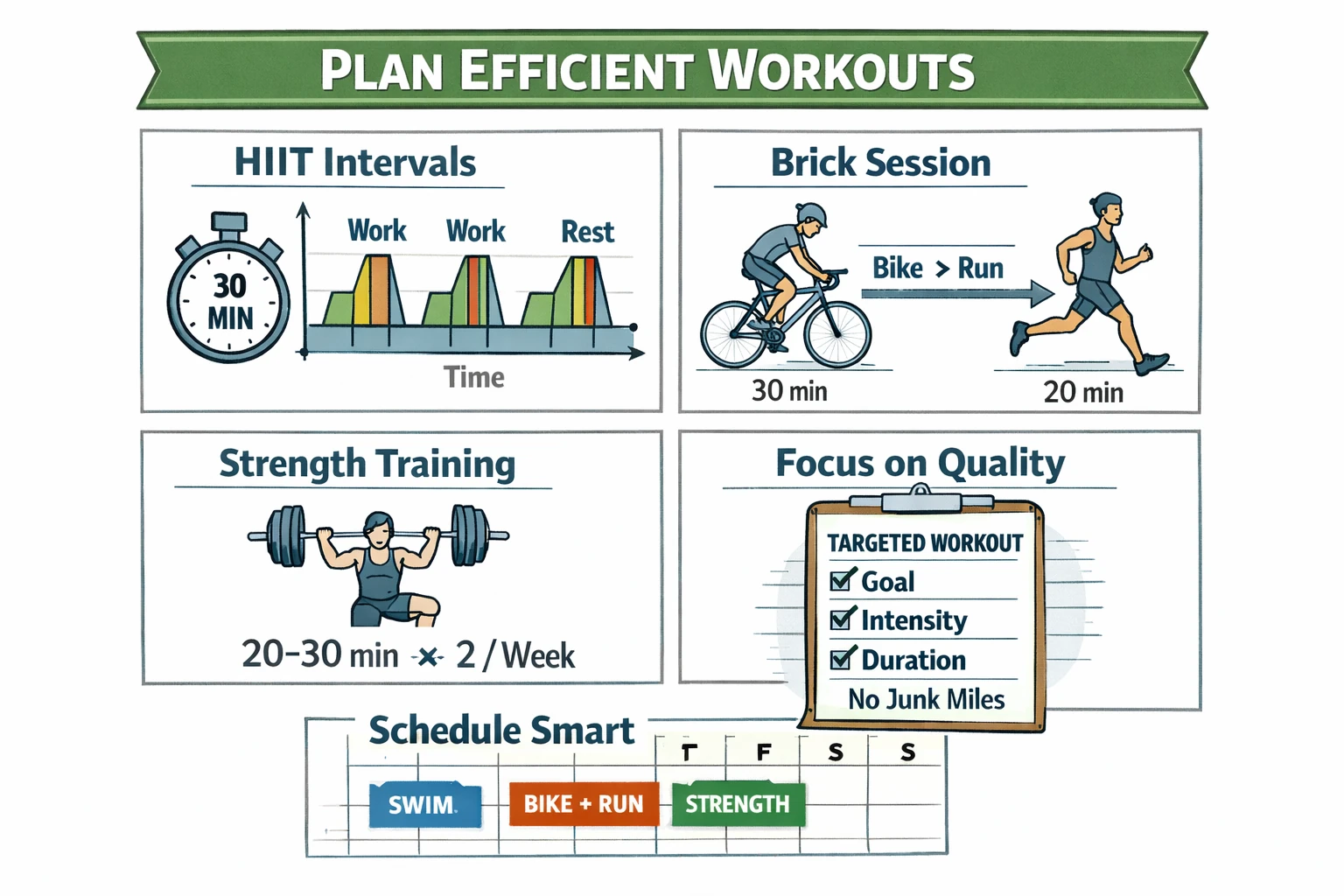
When time is limited, quality beats quantity. Build sessions that hit your goals fast. That means intervals, tempo runs, or focused bike blocks instead of long easy rides every day.
Block your calendar like a meeting. Treat key sessions as non-negotiable. This keeps training visible and makes it easier to commit to the plan.
Here is a short list of ways to make workouts more efficient. Consider which ideas fit your schedule and sport.
Try these time-saving workout methods:
- High-intensity intervals for aerobic gains in less time.
- Combined sessions (bike+run) when transitions are short.
- Strength sessions for 20–30 minutes twice a week to reduce injury risk.
- Quality over quantity: focus on purpose every session.
Optimize recovery and sleep
Recovery is part of training. You must schedule it with the same care as hard sessions. Good recovery makes the work you do count more.
Set a consistent bedtime and wake time. Short, regular sleep beats long but irregular nights. Aim for habits that fit your life and let you recover well.
Small habits matter. Short naps, mobility routines, and simple stretching before bed can speed recovery. This is a key part of athlete time management for busy people.
Fueling and meal prep
Food planning saves time and energy. When meals are sorted, you make better training and recovery choices without thinking too much in the moment.
Consider creating batch-cooked meals and snacks that travel well. This keeps fueling consistent during long training weeks and hectic workdays.
One useful way to organize food is called Creating A Time-effective Meal Prep Routine For Athletes. It means planning portions, timing, and quick options for busy days. Use one prep day each week and make it routine.
Try this short list to simplify fueling:
- Cook staples in bulk: rice, pasta, roasted vegetables, grilled protein.
- Portion snacks and bottles the night before long sessions.
- Keep easy recovery meals ready: yogurt, shakes, or a reheatable bowl.
Tools, routines, and small habits
Use tools to reduce friction. A simple calendar app, a shared family planner, and a training log are enough for most athletes. Pick just one or two tools and stick with them.
Create short routines around key moments: morning gear check, evening stretch, and nutrition prep. Small routines free mental energy for training decisions that matter.
Talk with coaches and partners about your schedule. When others know your plan, it is easier to protect key sessions. This is part of good planning and long-term success.
Key Takeaways
Time management techniques are about choices. Set clear training priorities and protect the sessions that matter most. Simple systems keep consistency high.
Plan efficient workouts, schedule recovery, and use meal prep to save time. Small habits add up and reduce last-minute stress. This leads to better training and more energy for life.
Keep the plan simple. Use calendars, short routines, and clear lists. With steady focus you will make steady gains while balancing a busy schedule.