
Improving endurance makes daily life easier and sport more fun. This article explains simple, proven ways to get better endurance. Read on to learn what to do and why it works.
Why improving endurance matters
Endurance helps you move longer with less tiredness. It matters whether you run, cycle, play sports, or work a long day. Better endurance increases energy and confidence.
Many people think endurance only helps athletes. That is not true. Better endurance helps health, mood, and recovery. It also lowers the risk of illness and injury over time.
Improving endurance is a steady process. Small steps add up. When you plan training and recovery, progress comes quickly and safely.
Training principles for improving endurance
Good training follows a few simple rules. Use steady progress, variety, and regular rest. These principles keep you strong and reduce injury risk.
Consistency is key. Train most weeks and aim to increase time or distance slowly. A common rule is to raise volume by no more than 10 percent each week.
Variety helps your body adapt. Mix long easy sessions with harder work and cross training. This mix builds both stamina and speed.
Below are core principles to guide a training plan. Use them to structure workouts and recovery for steady gains.
- Progressive overload: Gradually increase activity to force adaptation without overload.
- Specificity: Train movements that match your goal, like running if you want to run farther.
- Recovery balance: Plan rest days and lighter weeks to let your body rebuild.
- Consistency: Frequent, steady sessions beat occasional extremes.
Effective workouts to build endurance
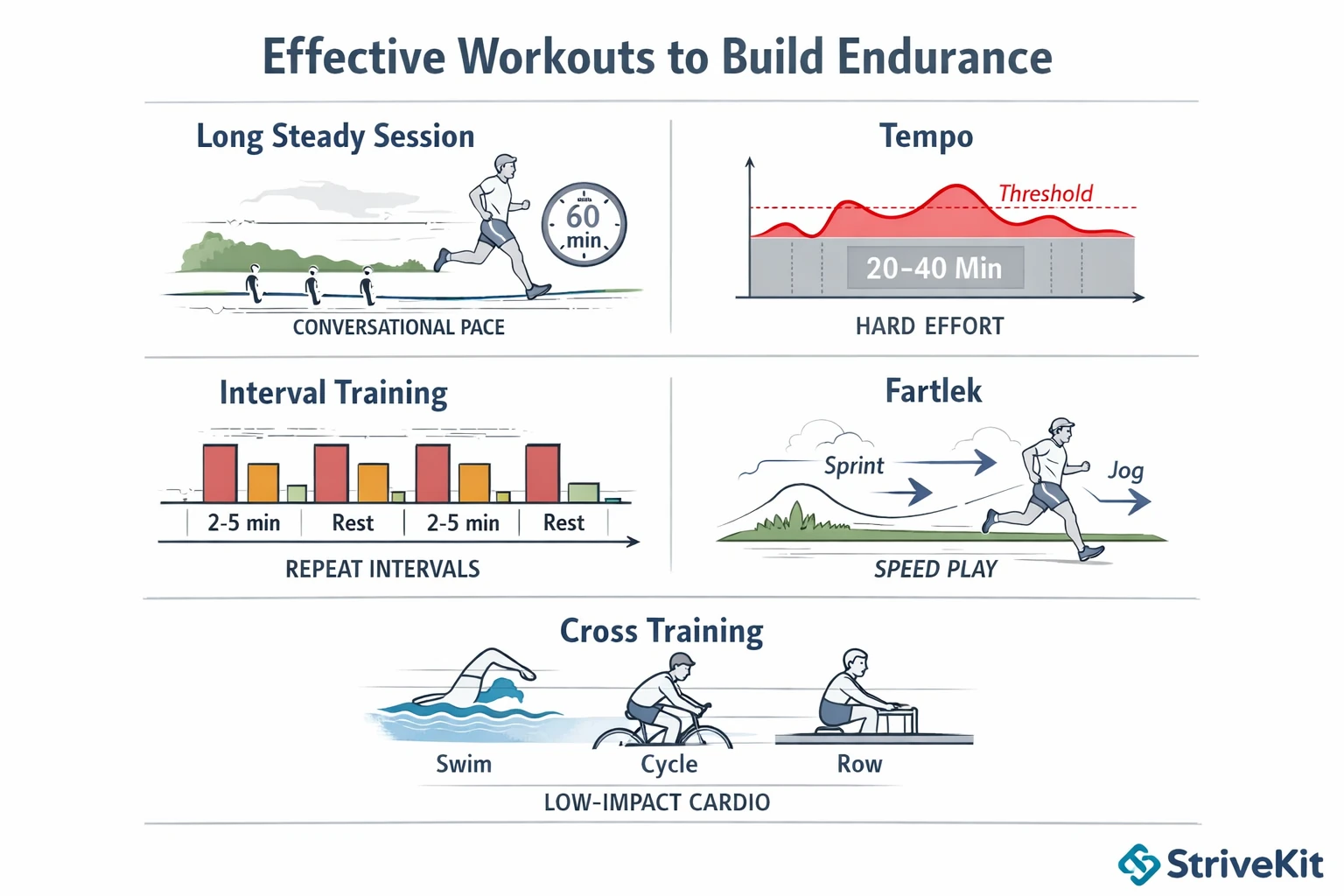
Picking the right workouts helps you get fitter faster. Use sessions that target stamina, pace control, and sustained effort. The right mix makes training fun and effective.
Start each session with a warm up. End with a cool down and light stretching. These steps protect your body and speed recovery for the next workout.
Here are practical session types to use in your week. Rotate them based on goals and fitness level. These are effective workouts you can adapt for any sport.
- Long steady session: One longer session at an easy pace builds base endurance. Keep the pace conversational.
- Tempo: A sustained effort at a comfortably hard pace for 20 to 40 minutes. This raises your threshold.
- Interval training: Short hard efforts with rest in between. Try 4 to 8 repeats of 2 to 5 minutes with equal rest.
- Fartlek: Playful speed changes during a run or ride. Add short pickups to break monotony and train surges.
- Cross training: Swimming, cycling, or rowing on easy days keeps volume high without extra joint stress.
Rotate these sessions across the week. For example, one long day, one tempo day, one interval day, and easy cross training or rest days. Track how your body responds and tweak the plan.
Recovery and nutrition for steady gains
Recovery and food are as important as workouts. Without proper rest and nutrition, progress stalls. Plan both with the same care as training.
Sleep is the most powerful recovery tool. Aim for seven to nine hours per night. Good sleep helps repair muscle and restore energy.
Below are simple nutrition and recovery tips to support improving endurance. Follow what fits your body and goals.
- Fuel before training: Eat carbs and a little protein 1 to 3 hours before hard sessions.
- Refuel after: A mix of carbs and protein within an hour helps repair muscles and rebuild glycogen.
- Hydration: Drink water throughout the day and replace fluids lost during long sessions.
- Active recovery: Light movement like walking or easy cycling the day after hard work speeds recovery.
Use small experiments to find what food and timing work best. Keep a short log for meals, sleep, and how you feel during workouts.
Endurance training gear and tracking
The right gear can make training easier and safer. You do not need the most expensive items. Simple tools help measure progress and keep you motivated.
Start with basic items that fit your sport and body. Shoes, a watch, and comfortable clothing are often enough. Focus on function over style.
Here is a short list of useful items. These tools help you track improvements and stay consistent with training and recovery.
- Good footwear: Shoes that match your foot type and sport lower injury risk and improve comfort.
- Heart rate monitor or GPS watch: Track pace, distance, and effort to guide training decisions.
- Hydration tools: Handheld bottles, vests, or bike cages for long sessions.
- Recovery aids: Foam rollers and a basic massage ball help reduce tightness after hard workouts.
Searching for endurance training gear will show many options. Pick a few that solve real needs and avoid buying too much at once. Use tracking tools to measure progress and refine your plan.
If you want a deeper plan, consider resources like The Complete Guide To Improving Your Endurance for step by step layouts and sample weeks. Use such guides as a template and adapt them to your life.
Key Takeaways
Improving endurance is simple when you follow a plan. Train consistently, mix session types, and rest well. Small steps and steady work produce big change.
Include long easy days, tempo sessions, intervals, and cross training. Pair workouts with good sleep, sensible nutrition, and gradual increases in load. That combo drives real gains.
Use practical tools to stay motivated and track progress. Focus on simple, effective workouts and gear that helps you train more often. Enjoy the process and celebrate steady wins.
Start today with one clear change. Add a longer easy session or one tempo workout per week. Keep the habit going and watch your endurance grow.