
Feeling strong on long runs or rides starts with smart fluid choices. This article shows how to optimize hydration for endurance training so you perform better and recover faster. Read clear, practical steps you can use now.
Why optimize hydration matters
Hydration affects energy, focus, and how your muscles work. Even small fluid losses can make effort feel harder and slow your pace. That is why athletes should treat fluids as part of their daily training plan.
When you train for long periods, your sweat rate rises and you lose fluids and salts. You can refill plain water, but fluids also carry minerals that your body needs. Paying attention to both volume and content matters for steady performance.
Good hydration helps temperature control too. It keeps blood flow to working muscles and supports your heart rate. This means you can keep going longer and feel better during and after sessions.
Finally, hydration links directly to recovery. Proper fluid intake after training helps repair muscles and restore normal function. That sets you up for the next hard session with less fatigue and fewer aches.
Calculate your personal fluid needs
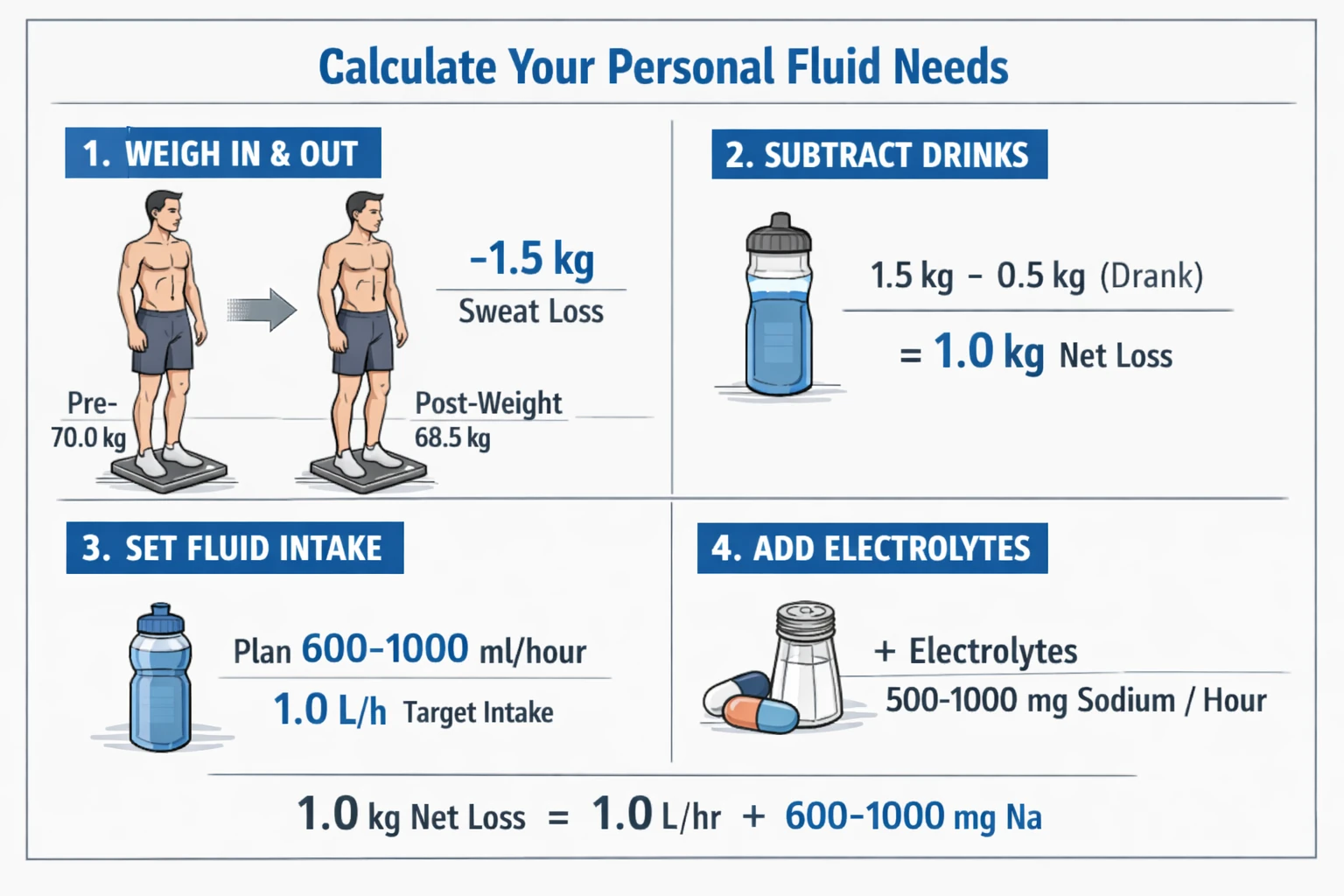
Start by estimating how much you lose through sweat. You can do a simple weigh-in test before and after exercise to find your sweat rate. This helps you plan how much to drink during training.
Do this test in similar conditions to your usual workouts. Weigh yourself naked before the session, then do your normal training for 60 minutes, and weigh again after drying off. The weight difference in ounces or liters shows fluid loss.
Use the number to set a drinking goal. If you lose 1 liter in an hour, plan to drink about 0.75 to 1 liter per hour depending on intensity and weather. This keeps you close to fluid balance and reduces the risk of cramping or heat stress.
Below is a short checklist to calculate needs and track results. Follow these steps each season or when conditions change.
Before the list, remember that individual needs change with heat, fitness, and gear. Treat the list as a starting plan and adjust as you learn your responses.
- Weigh test: Track pre- and post-session body weight to estimate sweat loss.
- Adjust for drink: Subtract any fluid you drank during the session from the weight loss number.
- Set rate: Aim for a drinking rate that replaces 60 to 100 percent of fluid loss during exercise.
- Account for salts: Add electrolyte targets for long sessions or heavy sweaters.
Electrolytes and fuel
Electrolytes keep your muscles and nerves working. Sodium, potassium, magnesium, and calcium help manage fluid balance and muscle contractions. Ignoring them can lead to cramping or poor performance.
Many endurance athletes benefit from products that contain salts and small amounts of carbohydrates. These support both hydration and energy during long sessions. Choose a product that matches your sweat loss and taste preference.
Think about the importance of electrolytes when you plan long workouts or races in heat. Replace both fluid and salt to keep pace and avoid fatigue that starts in the muscles or mind.
Here is a simple set of options to use during training and events. Use this list to match product type to session length and conditions.
- Short sessions under 60 minutes: Water or low-sodium sports drink may be fine.
- Sessions 60–120 minutes: Electrolyte drink with 200–400 mg sodium per liter helps maintain balance.
- Longer than 2 hours: Consider higher sodium levels, gels with salt, or electrolyte capsules alongside fluids.
Before training: top preparation steps
Start every workout with a plan to optimize hydration. Drinking well before you begin sets a steady baseline and lowers the chance of hit-or-miss fluid needs mid-session. Aim to be slightly hydrated, not overloaded.
Two to three hours before a long session, drink about 400 to 600 ml of fluid. This gives your body time to absorb it. If you are thirsty 15 minutes before the start, take a small sip to top off comfort.
Include a small snack that has some salt if you expect to sweat a lot. Foods like a banana with a pinch of salt or a small sandwich can help set sodium levels and provide fuel.
Below is a short list of pre-training tips that work in many climates. Use these to build a routine that fits your schedule.
- Hydrate early: Drink steadily through the morning rather than chugging at the last minute.
- Match conditions: Increase fluids if it is hot or humid.
- Salt strategy: Add a bit more sodium if you are a heavy sweater or prone to cramps.
During training: smart timing and amounts
Plan your intake by time and effort. Sip regularly rather than large gulps. Small, steady amounts absorb better and keep your stomach calm during hard efforts.
Use bottles or packs that allow easy sipping. Test different volumes in training until drinks feel comfortable. Practice is key so you know how your gut reacts under load.
In hot conditions, increase your drinking rate and include electrolytes. If you feel dizzy, weak, or overly tired, slow down and increase fluid and sodium intake until you recover.
Here are concrete during-training tips to follow on long sessions. Read them and pick the ones that fit your routine.
- Sip every 10-20 minutes: Keeps intake steady and prevents stomach upset.
- Use mixes that match sweat loss: Higher sodium for heavy sweating, lower for mild sweat.
- Practice fueling too: Combine fluids with carbs to maintain energy for efforts over 90 minutes.
After training: refill and repair
Recovery includes fluids. Drink to replace weight lost and restore electrolytes. Aim to replace about 150 percent of fluid lost in the first few hours after exercise to account for ongoing urine and sweat.
Pair fluids with a mix of carbs and protein to speed muscle repair. Good options include a balanced meal or a targeted product. Some athletes use recovery drinks to save time and ensure consistent nutrients.
Monitor urine color and volume as an easy daily check. Pale, plentiful urine usually means you are well hydrated. Dark or low volume suggests you need more fluid and salts.
Below is a brief recovery checklist you can use after long efforts or races. Keep it simple and repeatable for best results.
- Weigh in: Track post-session weight and drink to reach 150 percent of lost fluids in the next 2-4 hours.
- Choose carbs and protein: Aim for a 3:1 or 4:1 carb-to-protein ratio when possible.
- Include electrolytes: Use a drink or food with sodium to restore balance faster.
Key Takeaways
To optimize hydration you must plan for your sweat rate, the weather, and the length of your sessions. Small tests and steady practice build a plan that fits your body and goals.
Electrolytes matter as much as fluid volume for long training sessions and hot weather. Keep simple products on hand and adjust sodium based on how you feel and how much you sweat.
Use the before, during, and after approach to reduce surprises. Practice bottle handling, taste, and volumes so race day feels familiar. Consider reading resources like Top Recovery Techniques For Busy Endurance Athletes to expand your routine.
Track progress by noting performance, recovery, and daily urine checks. With steady work you will see gains in endurance, comfort, and recovery. Enjoy training with clearer, smarter hydration.