

Triathlon training can feel exciting and a bit overwhelming. You want clear steps that help you improve without injury. This article explains how to plan and run effective triathlon training. It covers planning, swim, bike, run, strength, recovery, and race nutrition in plain language.
The goal is practical advice you can use this week. You will find specific session types, how to build time, and simple rules for recovery. Read each section and pick a few tips to test on your next workout.
This guide is for new and returning triathletes. If you have a coach, use these ideas to discuss your plan. If you train alone, these steps will help you train smarter and feel more confident on race day.
Triathlon Training Plan
A clear plan makes triathlon training manageable. Start with a goal race and work backward. Break the season into base, build, and taper phases. Each phase has a different focus so your body adapts safely.
Base phase means building aerobic fitness and comfort in each sport. Build phase adds intensity and race-specific work. Taper reduces training to sharpen freshness for the race. This structure helps reduce stress and improve performance.
Begin with weekly hours, not exact workouts. If you can train 6 to 8 hours a week, set workouts inside that boundary. Consistency beats one long hard session followed by rest. Make small weekly increases to avoid injury.
Below is a simple weekly template you can adapt. Read the items and use the template that matches your available time and race distance.
Use this template as a starting point for a week of triathlon training. It balances swim, bike, run, and recovery and shows how to build time safely.
- 3-sport week (6 to 8 hours): 2 swims, 2 bikes, 2 runs, 1 strength session, 1 rest day.
- 4-sport week (8 to 10 hours): 3 swims, 2 bikes, 3 runs, 2 strength sessions, 1 rest day.
- Event-specific week: add a brick session (bike then quick run) and longer bike or run as you approach race distance.
Swim Training for Triathlon
Swimming is often the most technical part of triathlon training. Many athletes can improve quickly with consistent, focused practice. Key goals are breathing, sighting, and sustainable pace for the race distance.
Start each swim with drills and a warm-up. Drills build technique and reduce wasted energy in the water. After warm-up, do a main set that targets endurance or speed depending on your phase.
Below are swim session types that fit into triathlon training. Read the list and pick one or two sessions each week based on your plan phase and time available.
- Technique session: drills, 8 to 12 x 50 yards with rest, focus on body position and breathing.
- Endurance session: 3 x 800 to 1500 meters at steady pace with short rest intervals.
- Speed set: 10 to 20 x 50 to 100 meters at race pace or faster with full recovery between intervals.
- Open-water practice: sighting, starts, and group swimming to build comfort in race conditions.
Make one swim per week open water if possible. Practice sighting and swimming in a straight line. If open water is not available, practice sighting in a pool by lifting your head occasionally to check a marker.
Include at least one longer steady swim each week during base phase. This builds comfort and aerobic capacity. During build phase, add race-pace intervals and simulated efforts with sighting practice.
Bike Training for Triathlon
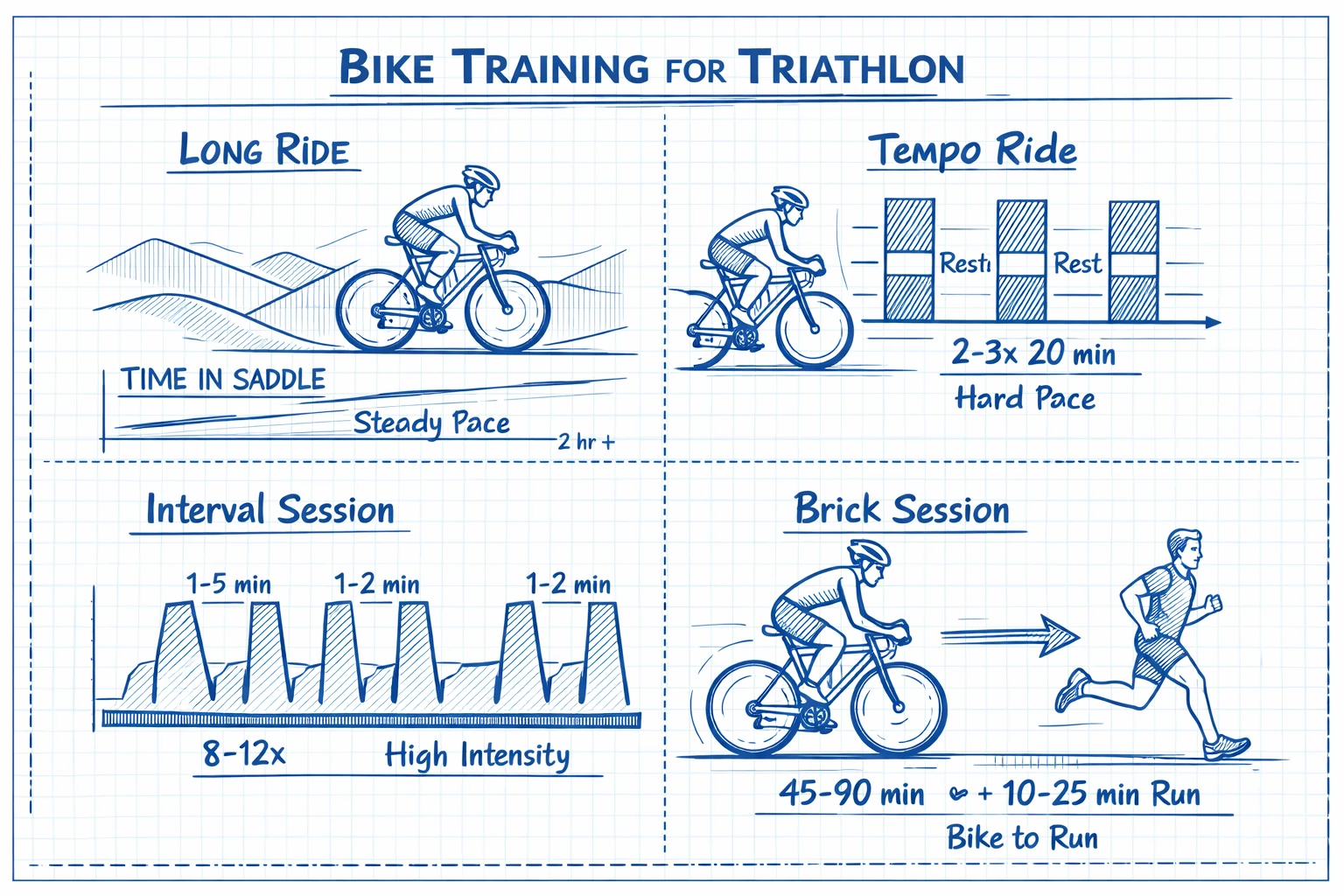
Bike training takes the most time for most triathletes. Focus on building endurance and efficient pedal technique. Learn to pace so you do not overwork on the bike and ruin your run.
Start with long steady rides to build base miles. Add tempo and interval work in the build phase to raise your sustainable power. Practice riding in the aero position to get comfortable if you use aero bars.
Below are common bike sessions to include in your triathlon training. Read the list and schedule a mix of these each week to develop speed, power, and endurance.
- Long ride: a steady-paced ride 60 to 120 minutes or longer depending on distance, focusing on time in the saddle.
- Tempo ride: 2 to 3 x 20 minutes at a comfortably hard pace with short recovery between efforts.
- Interval session: short efforts like 8 to 12 x 1 to 5 minutes at high intensity with equal or shorter recovery.
- Brick session: 45 to 90 minute bike immediately followed by a short run of 10 to 25 minutes to train the legs for the transition.
Practice fueling and hydration on the bike. Test products and timing in training so you know what works on race day. Riding comfortably in the aero position for long periods is a skill; build it gradually.
Include one ride each week that focuses on cadence and smooth pedaling. This helps efficiency and reduces muscle fatigue when you start the run.
Run Training for Triathlon
Run training after cycling is unique in triathlon. Your legs must learn to change from bike cadence to run stride. Work on easy aerobic runs, race-pace efforts, and brick runs that follow a bike session.
Keep run volume steady and increase slowly. A strong run is usually based on consistent miles, not one hard workout. Quality sessions should be placed when you are fresh or after an easy bike to simulate race feeling.
Below are run session types that fit into triathlon training. Read the list and choose sessions based on your race distance and weekly plan.
- Easy runs: 20 to 60 minutes at a comfortable pace to build aerobic base and recover between hard sessions.
- Tempo runs: 20 to 40 minutes at a challenging but sustainable pace to raise lactate threshold.
- Intervals: track or road repeats like 6 to 10 x 400 to 1000 meters with recovery to build speed.
- Brick run: short run after a bike session to practice the bike to run transition and leg turnover.
Always include a short warm-up and cool-down for run sessions. After hard efforts, add extra easy minutes to help recovery. If you are new to running, prioritize gradual mileage increases to avoid injury.
Race pace practice should feel controlled. Do segments at your target triathlon run pace and learn how that pace feels when fatigued. That feeling guides pacing on race day.
Strength and Recovery
Strength training makes triathlon training more durable. A two to three session per week plan helps with core stability, injury prevention, and power. Keep sessions short and focused so they fit around swim, bike, and run.
Focus on functional strength moves that mimic triathlon demands. Core, single-leg work, and hip strength are important. Use bodyweight or light weights and progress slowly as technique improves.
Below is a short list of strength moves to include. Read the list and plan short circuits of 20 to 30 minutes that you can do twice a week.
- Plank variations for core stability and posture during long rides and runs.
- Single-leg deadlifts to build balance and posterior chain strength for efficient cycling and running.
- Step-ups or Bulgarian split squats to develop single-leg strength for running power and stability.
- Glute bridges and hip thrusts to strengthen hips and reduce lower back and knee strain.
Recovery is as important as the hard work. Sleep, proper nutrition, and easy days allow adaptation. Schedule an easy day or full rest day every one to two weeks depending on your load and life stressors.
Use active recovery like easy swims or short walks to increase blood flow without stress. Pay attention to soreness that does not improve with easy activity, and adjust training to prevent overuse injuries.
Nutrition and Race Day
Nutrition affects how you train and how you race. Good fueling supports workouts and helps recovery. Practice race nutrition in training so your stomach reacts well on race day.
Before hard sessions and long rides, eat a carb-focused snack one to two hours prior. During long efforts, plan to take 30 to 90 grams of carbohydrate per hour depending on intensity and duration. Hydration strategy is also crucial and varies with heat and sweat rate.
Below is a checklist to prepare your race day nutrition and equipment. Read the list and use it during training to avoid surprises on race morning.
- Pre-race meal: a familiar, low-fiber meal 2 to 3 hours before the start.
- On-bike fuel: gels, bars, or drinks tested in training and stored where you can reach them easily.
- Hydration plan: bottles or a hydration pack and electrolyte replacement if the race is hot.
- Transition checklist: helmet, shoes, race belt, goggles, nutrition, and spare items organized the night before.
Practice your transition setup and nutrition routine in brick sessions. Simulating the race day flow reduces stress and saves time. Familiar routines make it easier to execute under pressure.
If you have a coach, review your nutrition plan together. If you train alone, keep notes on what worked and adjust based on race-day feedback. Small tweaks often make the biggest difference.
Key Takeaways
Triathlon training gets easier when you follow a clear plan. Break the season into base, build, and taper phases. Balance swim, bike, run, and strength to build durable fitness over weeks and months.
Practice specific sessions and brick workouts to prepare for race pace and transitions. Test nutrition and pacing in training so you are confident on race day. Rest and recovery are part of the plan, not a break from progress.
Start small, stay consistent, and make steady increases in volume and intensity. With a practical approach to triathlon training, you will improve safely and enjoy the process. Get excited, pick a few tips from this guide, and try them out this week.
Leave a Reply