Feeling pressed for time but still want to train hard? You can keep growing as an athlete while holding a full-time job. This article shows clear steps to set training priorities, plan your week, and keep recovery on track so you make steady gains without burning out.
Read on for simple methods you can apply this week. You will get ideas for scheduling, quick sessions, nutrition tips, and how to track progress. Use these to stay focused and consistent.
Set Clear Training Priorities
Know what matters most right now. Pick one or two goals you want to hit in the next 4 to 12 weeks. That might be strength, endurance, speed, or staying injury free. When you choose a few priorities, you give each one real time and effort.
Write down your weekly targets and the reason behind them. A short list keeps you honest and helps you avoid overdoing less important work. This list should fit your job schedule and energy levels.
When you set training priorities, you also set rules. These rules might be how many hard workouts per week, or which days are for rest. Rules reduce stress. They make it easier to say yes to training and no to distractions.
Keep the plan flexible. If work gets heavy, shift a session rather than skip every workout. Flexibility helps you stay consistent with your main goals over months, not just a few days.
Plan Around Work
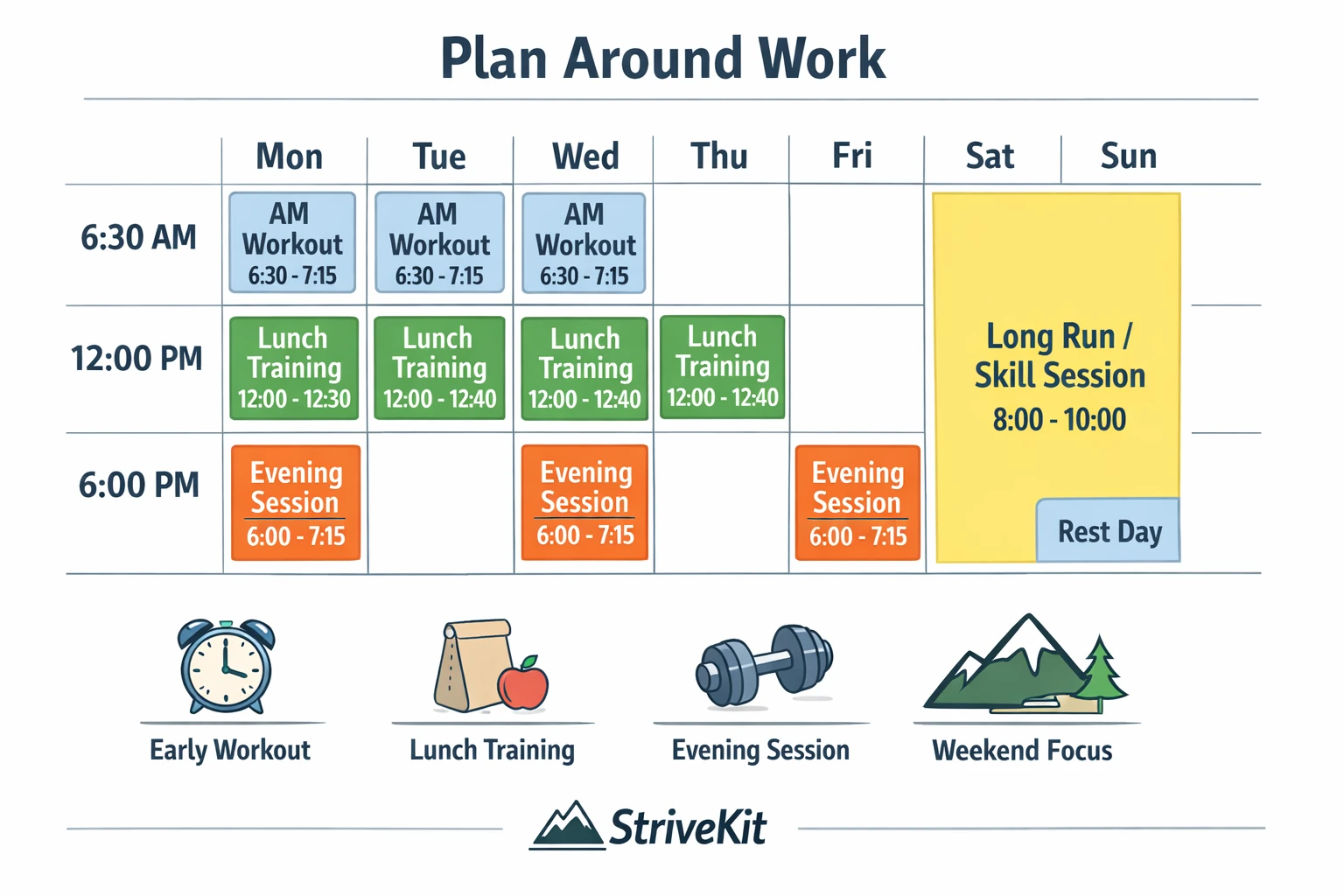
Block time on your calendar as if it were a meeting. Treat training like an appointment you cannot cancel. This small habit makes it easier to protect training time and shows others you take it seriously.
Create a weekly routine that fits your work pattern. If mornings are quiet, train then. If evenings are better, pick fixed days. Consistent blocks make it easier to plan meals and sleep around workouts.
Use a short weekly review to adjust the plan. Look at your work demands and move sessions where needed. That review keeps your training priorities realistic and helps you avoid last-minute stress.
Here are practical scheduling ideas to try this week. These options fit typical work hours and won’t take too much time.
- Early short sessions: 30 to 45 minutes before work for steady habits.
- Lunch breaks: 20 to 40 minutes of focused training or mobility work.
- Evening longer sessions: save tougher sessions for days you finish early.
- Weekend blocks: use one longer block for skill work or a long run/ride.
Make Sessions Efficient
When hours are tight, quality beats quantity. Focus on sessions that deliver the most return for time spent. Choose compound lifts, interval training, or sport-specific drills that match your priority.
Warm ups should be brief and targeted. A 10 minute routine that prepares the main movement saves time and reduces injury risk. After your main work, stop when you’ve met your target instead of going on autopilot.
Use simple templates to save decision time. A short template for strength, one for intervals, and one for skill work helps you jump straight into training. Templates make every session count toward your training priorities.
Before a training week, pick one main focus per session. This prevents scattershot workouts and keeps your progress steady. If you need tools, use a timer or app to stick to the plan and avoid drifting.
Support Recovery and Nutrition
Recovery wins weeks that work steals. Good sleep, smart food choices, and short active recovery sessions help you bounce back faster. When you recover well, you get more from each training session.
Small nutrition wins add up. Plan simple meals that include protein, carbs, and vegetables. Keep snacks ready for busy days. This will keep energy steady and reduce stress around food choices.
For many athletes, Creating A Time-effective Meal Prep Routine For Athletes is a game-changer. Batch cook staples, portion them, and label meals for the week. This saves decision time and helps you hit daily needs without fuss.
Work on athlete time management for sleep and recovery too. Set a regular bedtime, limit late screens, and use short mobility routines after work. These habits protect your training priorities by keeping you fresh for key sessions.
Track Progress and Adjust
Track small wins to stay motivated. Log weights, times, or reps so you see steady gains. When numbers move, you know your training priorities are working.
Review your log weekly. Check what went well and what needs change. If you miss sessions often, reduce the number or length rather than drop the key work. Small tweaks keep progress steady without stress.
Use simple metrics. Training load, sleep hours, and mood are enough to judge recovery. Match your load to how you feel. That keeps progress safe and sustainable.
Be honest with yourself. If work changes for a season, switch to maintenance focus. Set clear restart points so you can ramp intensity back up when time frees. This keeps long-term goals alive while you meet job demands.
Key Takeaways
Start by naming your top training priorities and protect them on your calendar. Clear goals make it easier to choose the right sessions and say no to the rest. A focused plan beats random effort.
Plan training around work blocks and use short sessions when time is tight. Make each session count with targeted warm ups and simple templates. Track progress and tweak the plan each week to stay on course.
Support your work and sport with basic recovery and easy meal prep. Creating A Time-effective Meal Prep Routine For Athletes and good athlete time management reduce stress and keep energy steady. These small habits help you keep consistent progress over months.
Follow these steps and you will meet both work goals and athletic goals. Keep it simple, protect your time, and make steady progress toward your training priorities.