

Ready to take your ironman training to the next level? This article guides experienced athletes through focused strategies you can use now. You will find structure, session types, fueling guidance, strength work, recovery plans, and race simulation tips to improve performance.
Training Principles
Strong ironman training starts with clear principles. Keep your goals measurable and break your season into blocks. That makes daily work purposeful and helps you track progress.
Balance is key. Mix long aerobic work with quality intensity sessions. Add strength and mobility to reduce injury risk and to make your body more efficient.
Be consistent. Small, regular gains add up. A steady plan yields more than sporadic hard weeks followed by long breaks. Stick with the plan and adapt when needed.
Pay attention to feedback. Use heart rate, power, pace, and how you feel. These signals help you adjust volume and intensity to stay on course.
Periodization for ironman training
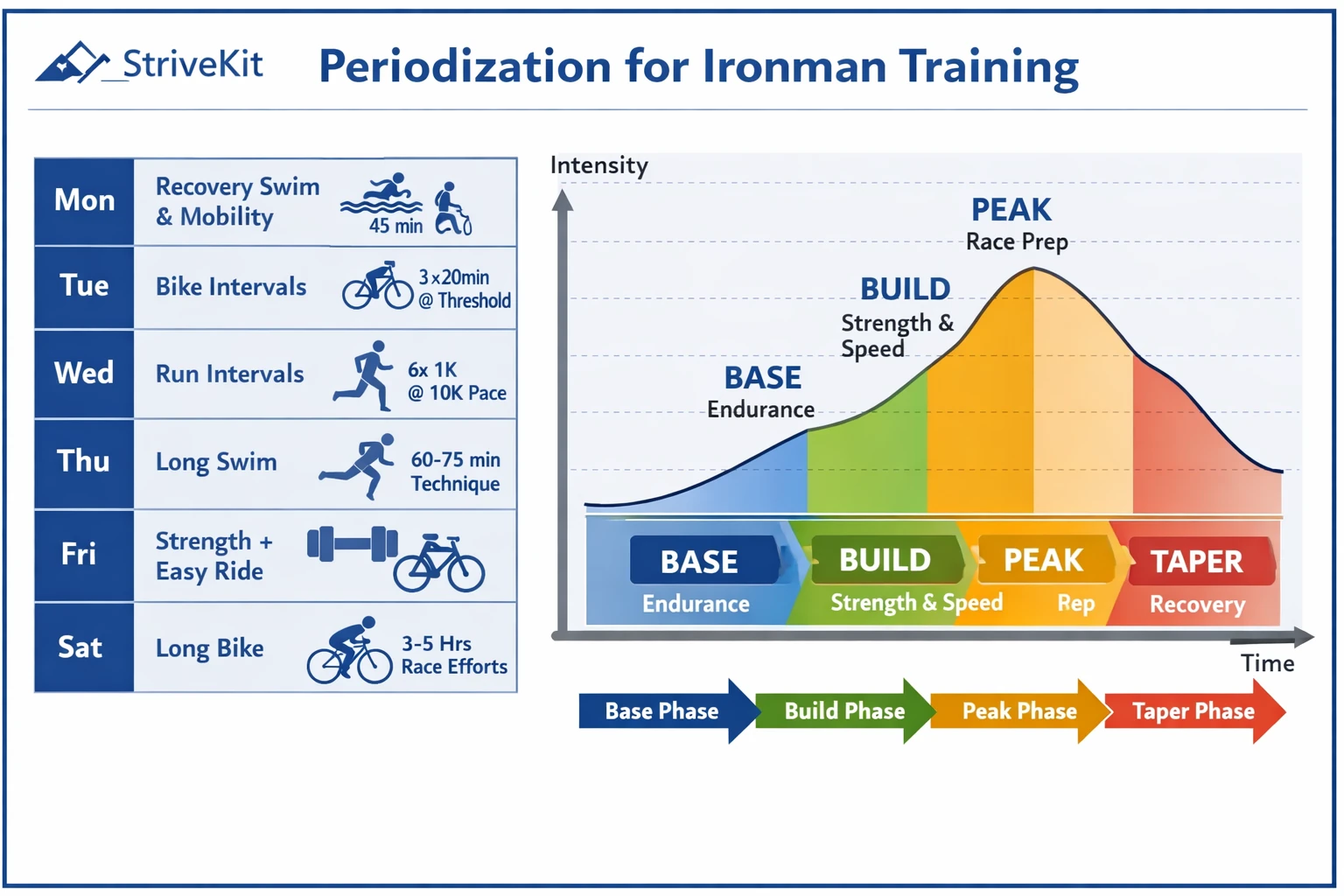
Periodization organizes training into phases. Typical phases are base, build, peak, and taper. Each phase has a clear purpose and different priority workouts.
Base phase builds endurance and work capacity. Focus on longer steady efforts and technical work. This helps create a platform for harder sessions later.
Build phase adds specific intensity. You train race pace, thresholds, and longer sustained efforts. This is the time to practice nutrition and pacing strategies.
Peak and taper reduce volume while keeping intensity. The goal is freshness and sharpness on race day. Plan the taper to match your race schedule and past responses to rest.
Below is a sample week for a build phase to show how sessions fit together. Use it as a template and adapt hours, intensity, and rest for your fitness.
- Monday: Recovery swim 45 min, easy mobility work
- Tuesday: Bike intervals – 3 x 20 min at threshold with easy warmup and cooldown
- Wednesday: Run session – 6 x 1k at 10K pace with easy run between sets
- Thursday: Long swim focusing on technique – 60-75 min
- Friday: Strength session + easy recovery ride 60 min
- Saturday: Long ride with 2-3 sustained race pace efforts
- Sunday: Long run with last 30 min at marathon pace
Swim, Bike, Run for ironman training
Each leg needs specific focus. For the swim, build technique, breathing, and interval speed. For the bike, train endurance, tempo, and handling. For the run, protect the legs while building speed and endurance.
Swim sessions should include drills, controlled speed work, and open water practice if you race outdoors. Technique saves energy on race day. Practice sighting and group starts when possible.
On the bike, use power or perceived effort to control training. Long rides build fuel tolerance and mental strength. Include tempo and threshold intervals to raise sustainable speed.
Run training must respect fatigue from bike work. Brick sessions – a bike followed by a run – teach your legs to adapt. Mix easy runs with tempo and interval work to build pace while avoiding overuse injuries.
Strength and Mobility
Strength work supports endurance and reduces injury risk. Focus on core, hip, and posterior chain strength. These areas maintain form late in long sessions.
Keep strength sessions short and heavy enough to build muscle resilience. Two to three sessions per week of 30-45 minutes is effective for most athletes.
Mobility and flexibility help maintain technique and range of motion. Add daily short mobility drills. They help you recover faster and run more efficiently.
Include specific exercises: deadlifts or Romanian deadlifts, single-leg squats, planks, and hip bridges. Keep volume controlled and progress slowly to avoid fatigue that affects key sessions.
Nutrition and Fueling for ironman training
Nutrition plays a huge role in ironman training success. Plan calories, macronutrients, and timing. Train your gut so your stomach responds well on race day.
Practice fueling during long sessions. Use real race calories and fluids during training. That prepares you psychologically and physiologically for race pacing and stomach tolerance.
Below is a clear checklist to guide fueling during long workouts and race day. Use these points to refine your plan in training sessions.
- Start with a carb-rich breakfast 2-3 hours before long sessions
- Target 60-90 grams of carbs per hour on the bike, adjust by tolerance
- Use easily digestible sources: gels, chews, and sports drink
- Practice sodium intake if you sweat heavily
- Test different textures and flavors in training to avoid surprises
Read materials on Best Practices For Fueling During Triathlon Training to learn timing, amounts, and food types. Good fueling practices can change how you train and perform. Work with a coach or sports dietitian for tailored guidance.
Recovery and Load Management
Recovery makes training effective. Without recovery, you risk burnout and injury. Plan recovery days and easier weeks into your block.
Use both active recovery and full rest. Easy swims, light rides, and mobility sessions speed recovery. Sleep and nutrition are non-negotiable for gains.
Track training load with simple metrics like session time, perceived effort, or TSS if you use power. Watch for signs of excessive fatigue: poor sleep, elevated resting heart rate, or persistent soreness.
When signs appear, reduce volume, lower intensity, and add recovery sessions. Adjusting early prevents forced long breaks later in the season.
Race Simulation and Taper
Race simulation sessions build confidence. Do at least a few long workouts that mimic race pace, fuel plan, and transitions. Simulate nutrition timing and equipment choices.
Practice race transitions and pacing. Time yourself changing gear and learn how your body responds to immediate run off the bike. These small gains matter on race day.
Taper to arrive fresh. Cut volume but keep some short, sharp sessions to maintain feel. Taper length depends on athlete and race distance, but 10-21 days is common for ironman events.
During taper keep nutrition steady and maintain sleep quality. Use the taper to mentally rehearse race plans and logistics. Confidence grows when physical prep meets mental readiness.
Key Takeaways
ironman training needs structure, practice, and smart recovery. Use periodization to build endurance and speed without burning out. Training blocks should lead to specific race fitness gains.
Work on swim, bike, and run specifics while adding strength and mobility. Practice fueling and fueling practices in long sessions so your gut and mind are prepared.
Track training load, watch for fatigue, and adjust early. Simulate race day and taper properly to arrive fresh and ready. These steps help you perform better and enjoy the race.
For athletes seeking more targeted plans, consider working with a coach familiar with advanced triathlon training. Small, steady improvements produce big race results.
Leave a Reply