

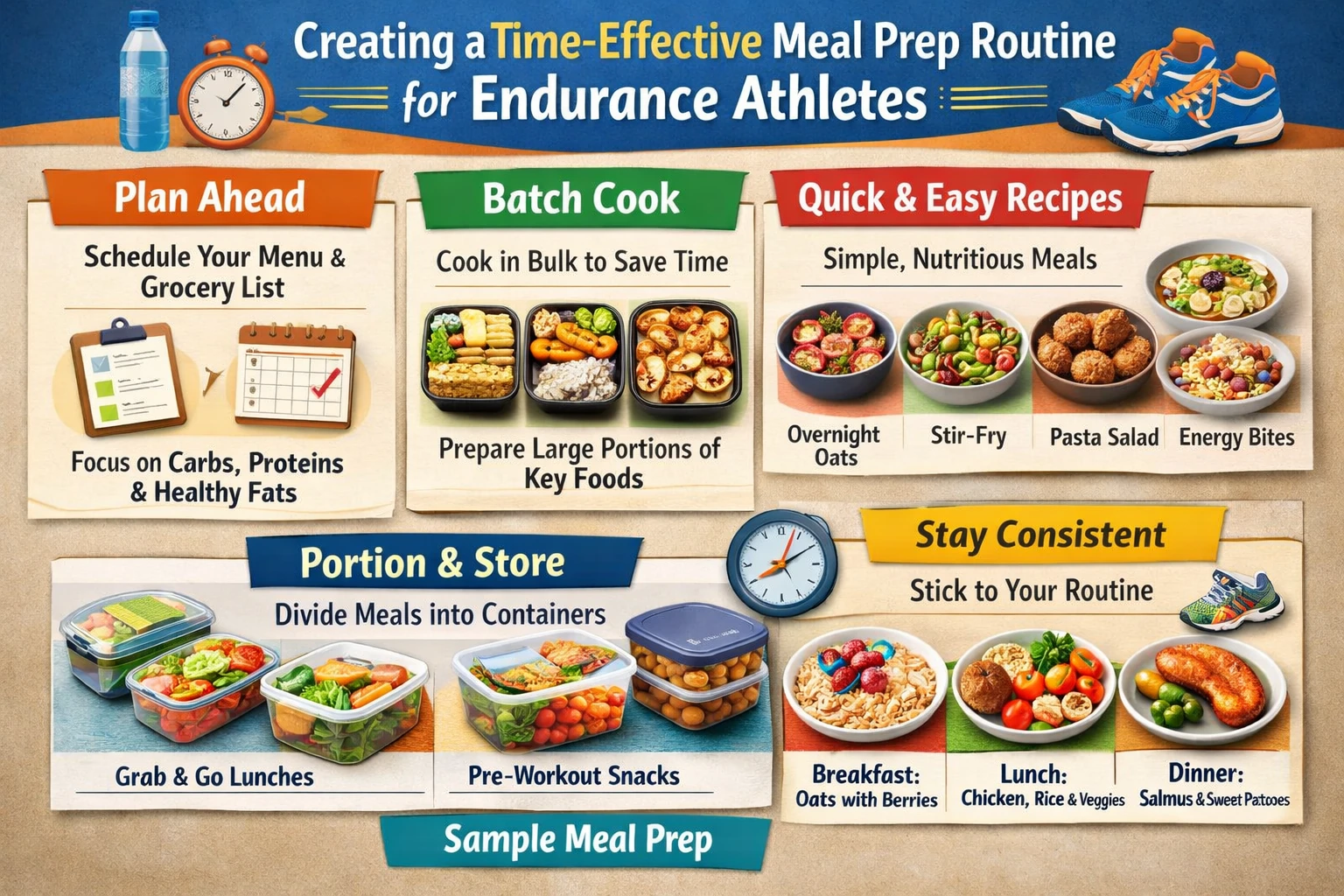
Good meal prep saves time and helps athletes train harder and recover faster. This article shows a clear, step-by-step way to build a meal prep routine. You will learn planning, shopping, cooking, portioning, and storage tips that fit a busy training schedule.
The focus is on practical choices you can start using this week. Read on to get easy strategies and sample meals you can adapt to your sport, goals, and taste. The plan is simple, flexible, and built for real life.
Follow the steps below to create a routine that cuts kitchen hours, supports workouts, and keeps food tasty all week. The guidance works whether you train once daily or twice a day.
Why meal prep works for athletes
Meal prep makes it easier to eat the right foods at the right times. When meals are ready, you reach for what fuels performance instead of guessing between practices. This reduces stress and helps you stick to a plan.
Preparing food in bulk saves time on busy days. Instead of cooking after a long session, you reheat and eat. That means more time for rest, mobility work, or extra sleep.
Meal prep also helps control portion sizes and nutrient balance. You can design meals to match training demands. This leads to steady energy, better recovery, and improved body composition.
Set goals and plan meals
Start by setting clear goals for the week. Decide if the priority is fueling hard workouts, losing weight, or building muscle. Goals guide food choices, portion sizes, and meal timing.
Next, build a weekly meal schedule that fits your training timetable. Match carbs to heavy training days and focus more on protein on strength days. Keep snacks ready for between sessions.
Use a simple plan to reduce decision fatigue. Pick two breakfasts, three lunches, and three dinners to rotate. That keeps variety but keeps shopping and prep simple.
Before shopping, make a short checklist: what meals you will eat, how many portions you need, and any swaps for allergies or preferences. This step makes cooking faster and shopping efficient.
Here are the basic planning steps to follow for a clear weekly menu:
Follow this short list when you plan your week.
- Write down training days and times so meals match energy needs.
- Choose 2-3 base meals for each eating occasion to repeat.
- Decide portion targets for each meal: carbs, protein, and fats.
- Note any snacks that need to be prepared or packed.
- Set one or two cooking days that fit your schedule.
Smart shopping and batch cooking
Smart shopping saves time and money. Buy staples in bulk and choose versatile ingredients that work in many meals. This reduces the number of items you buy and speeds up prep.
Group your shopping list by category. Produce, proteins, grains, and pantry items in separate sections of the list help you move through the store quickly. Frozen produce can be a time and waste saver.
Batch cooking is the core of time-effective prep. Cook several servings of grains, proteins, and roasted vegetables at once. Then combine them into meals across the week.
Before you start cooking, clear a counter, set a multiple-pot plan, and preheat ovens. A small amount of setup cuts total cook time and keeps the kitchen organized.
Use this shopping and batch-cook checklist to speed up the whole process:
Read this list before you head to the store or start cooking.
- Staple proteins: chicken breasts, canned tuna, eggs, tofu, or lean beef.
- Grains and starches: rice, quinoa, sweet potatoes, or pasta.
- Vegetables: a mix of fresh and frozen for variety and convenience.
- Healthy fats: olive oil, nuts, seeds, and avocado for satiety.
- Quick snacks: Greek yogurt, hummus, and whole fruit for fast energy.
Portioning and nutrient balance
Portioning helps you meet training goals without guesswork. Use containers that match meal sizes and practice visual cues to estimate portions when needed. This builds consistent fueling habits.
Balance each plate with protein, carbohydrates, and vegetables. Protein supports muscle repair, carbs refill energy stores, and vegetables add fiber and micronutrients. Fats support hormone health and long-term energy.
Adjust portions to training intensity. Longer or harder sessions need more carbohydrates. Recovery days can have lower carbs and the same or slightly higher protein to support repair.
Below are simple portion targets that work for many athletes. Use them as a starting point, then tweak based on your sport, body size, and goals.
Review these guideline targets to shape your meals.
- Protein: 20 to 40 grams per meal, depending on goals and body size.
- Carbohydrates: 1 to 3 servings per meal on training days; less on rest days.
- Vegetables: At least 1 to 2 cups per meal for vitamins and fiber.
- Fats: 1 to 2 tablespoons of healthy fat per meal for satiety and nutrient absorption.
- Snacks: 10 to 20 grams of protein and a small carb for quick recovery.
Quick prep recipes and snacks
Simple recipes keep meal prep doable. Aim for meals that use a few core ingredients and can be combined in different ways. This prevents boredom and keeps cooking time short.
Focus on batch-friendly recipes like roasted chicken, grain bowls, stews, and sheet-pan meals. These allow you to cook once and use the food in multiple dishes throughout the week.
Snacks should be portable and require little prep. Hard-boiled eggs, yogurt with fruit, and nut butter on rice cakes are fast options that support training needs.
Here are easy meal and snack ideas to add to your weekly plan. They are quick to make and simple to scale up.
Use these ideas to mix and match meals all week.
- Grain bowl: cooked quinoa or rice, roasted chicken, greens, roasted veg, olive oil, lemon.
- Sheet-pan dinner: salmon or tofu, mixed vegetables, sweet potato wedges, herbs.
- Protein stew: lean beef or lentils, tomatoes, root veg, cooked slowly for flavor.
- Breakfast jars: oats, milk or yogurt, fruit, and a scoop of nut butter or seeds.
- Recovery snack: Greek yogurt, honey, banana, and a small handful of nuts.
Tools and time-saving techniques
The right tools make meal prep fast and consistent. A few good containers, a sharp chef’s knife, and a reliable cutting board cut prep time significantly. An oven and slow cooker expand batch options.
Set a cooking routine with clear timing. Start grains first, then roast vegetables, then cook proteins. This order keeps pans in use and reduces idle time. Use a timer for each stage to avoid overcooking.
Work in assembly-line mode. Chop all vegetables together, then portion proteins, then pack containers. This flow saves time compared to making each meal one by one.
Below are tools and quick techniques to make prep efficient and repeatable. Most are budget friendly and easy to adopt.
Check this list and pick two or three items to start with.
- Quality food containers: choose sizes that match your meal portions and are microwave-safe.
- Sharp knives and a stable cutting board to speed chopping and improve safety.
- Large sheet pans and roasting trays for batch roasting vegetables and proteins.
- A slow cooker or instant pot for hands-off cooking of stews and grains.
- Kitchen scale or measuring cups to standardize portions when learning targets.
Food safety and storage
Safe storage keeps meals fresh and cuts waste. Cool cooked food quickly and store it in airtight containers. Label containers with the date so you use older meals first.
Most cooked meals last 3 to 4 days in the fridge. If you need food for longer, freeze portions and thaw them in the fridge a day before eating. This extends shelf life and keeps food safe.
Reheat meals to at least 165 F if possible, or until steaming hot. Stir food while reheating to avoid cold spots. If you are unsure about safety, choose to freeze portions and use within a safe timeline.
Follow these key storage rules to protect food quality and athlete health.
Read and apply these simple storage steps in your routine.
- Cool food within two hours of cooking and refrigerate in shallow containers.
- Store meals at 40 F or lower in the fridge and use within 3 to 4 days.
- Freeze meals for longer storage and thaw in the fridge before reheating.
- Label containers with dates and contents to avoid guesswork.
- When reheating, heat evenly and check that the center reaches a safe temperature.
Key Takeaways
Meal prep helps athletes save time and support training. A simple weekly plan, smart shopping, and batch cooking make it easier to eat well. Start with a clear goal and a short list of meals to repeat.
Focus on balanced portions, safe storage, and a few reliable tools. Keep meals varied but simple. Small habits, like labeling containers and using an assembly-line approach, speed the process and reduce stress.
Try one new routine this week: pick a cook day, plan three meals, and shop with a grouped list. Build from there and adjust portions to match your training demands. This small step will free time and make fueling consistent and effective.
Leave a Reply