

Want to push your limits with advanced triathlon training? This article explains clear methods to improve speed, endurance, and recovery. You will get practical steps for workouts, strength work, and fueling so you can train smarter and race better.
We will cover training blocks, specific sessions for swim, bike, and run, strength and recovery, plus how to build a plan. Read on to learn steps you can use right away to raise your performance.
Advanced Triathlon Training Blocks
Use blocks to structure your season. A block is a focused period where you target specific adaptations like base endurance, threshold power, or race pace. Block planning helps keep training varied and purposeful.
Each block should last three to six weeks. Start with a base block that builds aerobic capacity. Follow with a build block that adds intensity. Finish with a taper block before key races to sharpen form and freshness.
Within blocks, vary intensity and volume across weeks. A step-back week every three or four weeks reduces fatigue and supports steady gains. Consistency in blocks leads to reliable improvements over months.
Here is a simple block cycle to use as a template that balances load and recovery.
Use this list to plan your season around clear goals and avoid random workouts.
- Base (4-8 weeks): Long aerobic sessions, technique focus, low intensity.
- Build (3-6 weeks): Increase threshold and VO2 work, race-specific sessions.
- Peak (2-4 weeks): High-quality, race-pace training and skill sharpening.
- Taper (1-2 weeks): Lower volume, maintain intensity, rest and recover.
Advanced Triathlon Training Workouts
Good workouts mix quality and volume. You must train the energy systems used in triathlon events. That means building aerobic base and adding high-intensity sessions that match race demands.
In swim, bike, and run work, focus on technique first, then on targeted intervals. Technique saves energy. Strong technique helps you hold speed late in a race. Spend part of each session on drills and form work.
Practice race transitions and brick workouts to teach your body to switch disciplines smoothly. Bricks reduce the shock of changing from bike to run and improve race rhythm. Bricks also teach pacing and nutrition under fatigue.
Below are sample session types to include each week for balance and race readiness.
Use this list to build a weekly mix of efforts that matches your event distance and goals.
- Swim: Technique drills, tempo sets, and race-pace intervals (e.g., 10 x 100 at race pace with rest).
- Bike: Long steady rides, threshold intervals, and shorter VO2 max efforts for power gains.
- Run: Easy aerobic runs, interval sessions, and tempo runs that target race pace.
- Brick: Bike 60-120 minutes followed by a 20-40 minute run at race pace.
Advanced Triathlon Training: Strength, Recovery, and Nutrition
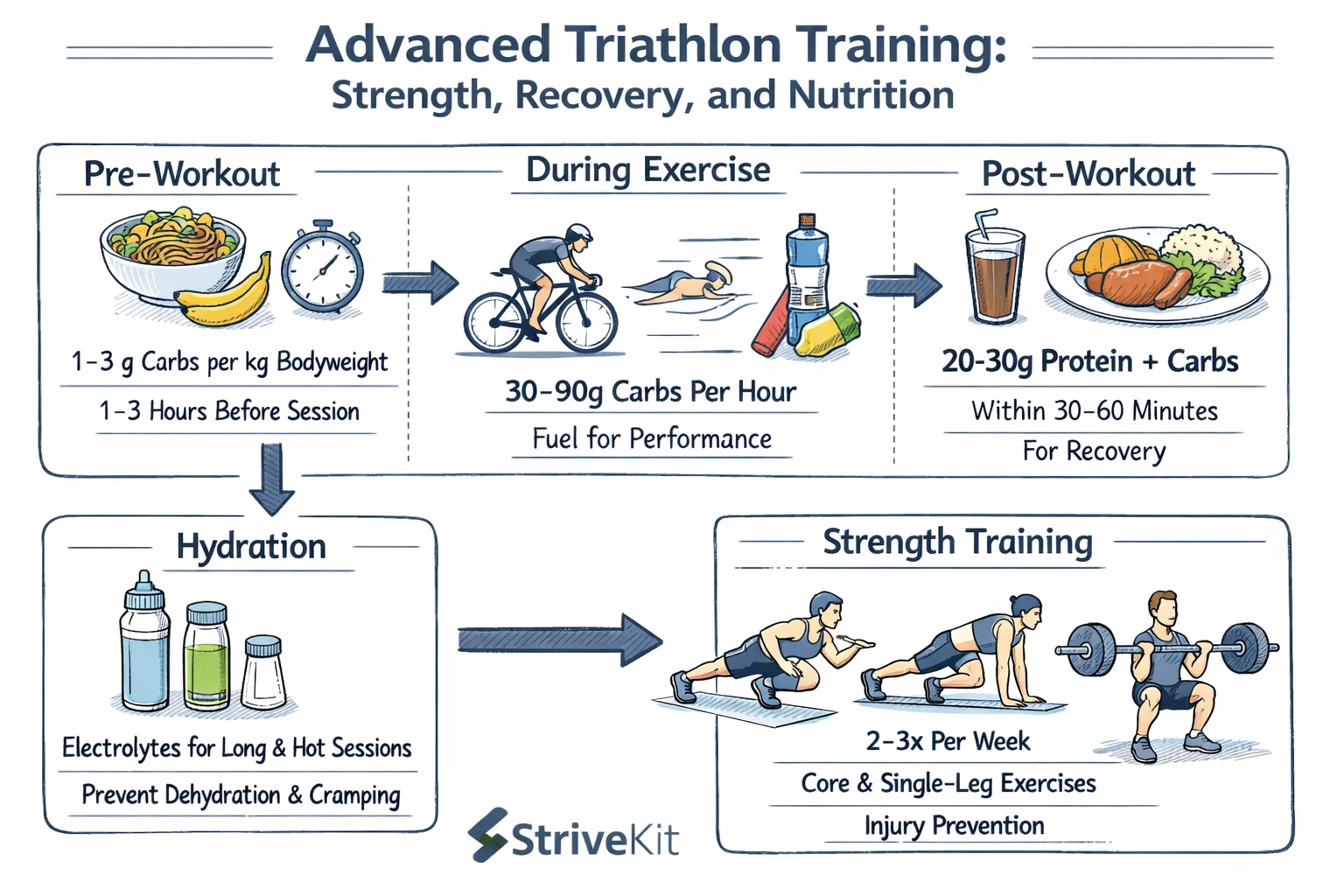
Strength training supports efficiency and injury resistance. Two to three sessions per week of targeted strength work is enough for most triathletes. Focus on core, single-leg strength, and hip stability.
Recovery is a training tool. Sleep, planned easy weeks, and active recovery all help adaptation. Use metrics like RPE, resting heart rate, and mood to guide recovery needs. Rest prevents overtraining and keeps progress steady.
Nutrition fuels training and determines how well you recover. Practice fueling on long sessions so your gut adapts. Learn simple rules for pre-workout meals and in-ride nutrition. Use whole foods and tested products that your stomach tolerates.
Below are clear recommendations for fueling and daily nutrition guidance you can apply today. This helps you stay strong in long training sessions and during races.
Consider these Best Practices For Fueling During Triathlon Training and strong fueling practices to keep energy steady and avoid stomach issues.
- Pre-workout: 1-3 g of carbs per kg bodyweight 1-3 hours before long sessions.
- During long sessions: 30-90 g carbs per hour depending on intensity and duration.
- Post-workout: 20-30 g protein with carbs within 30-60 minutes to speed recovery.
- Hydration: Plan electrolytes for hot or long efforts to prevent cramping and fatigue.
How to Build Your Advanced Triathlon Training Plan
Building a plan starts with a race goal and a simple test to set training zones. You can test by doing a time trial for bike and run, and a time trial swim set in the pool. Use results to set pacing and intervals.
If you are new to structured plans, start with a template and adjust by feel. Even experienced athletes benefit from a coach or a peer review. Keep training logs so you can see trends and adjust load as needed.
For new athletes, consider an entry-level guide to pacing and volume before moving to advanced work. A clear plan reduces confusion and speeds progress. If you have a base of consistent training, advanced methods will bring measurable gains.
Below is a step list to build a reliable plan, including an option for a simpler approach if you need it. This will help you create a triathlon training plan for beginners or scale up to advanced work.
Follow these steps to assemble a season plan that matches your goals and availability.
- Set goal race and date, then work backward using block structure.
- Establish weekly training hours based on life schedule and recovery needs.
- Assign sessions per week: 3-5 swims, 3-5 bikes, 3-5 runs depending on volume.
- Include two strength sessions and at least one full rest day per week.
- Test every 6-8 weeks and adjust zones and intensity as you improve.
Key Takeaways
Advanced triathlon training works best when it is simple and consistent. Use blocks to focus your work and keep progression steady. That makes your training efficient and measurable.
Mix strong swim, bike, run sessions with strength work and planned recovery. Practice bricks and race skills so race day feels familiar. Nutrition and recovery are as important as the hard workouts.
Build a plan around your life and be honest about fatigue. Test regularly, track progress, and adjust load to keep improving. With a clear plan, good fueling practices, and steady work, you will race faster and enjoy the process.
Start small, be consistent, and keep learning. Advanced triathlon training is about smart decisions and steady progress. Get after it with energy and focus.
Leave a Reply